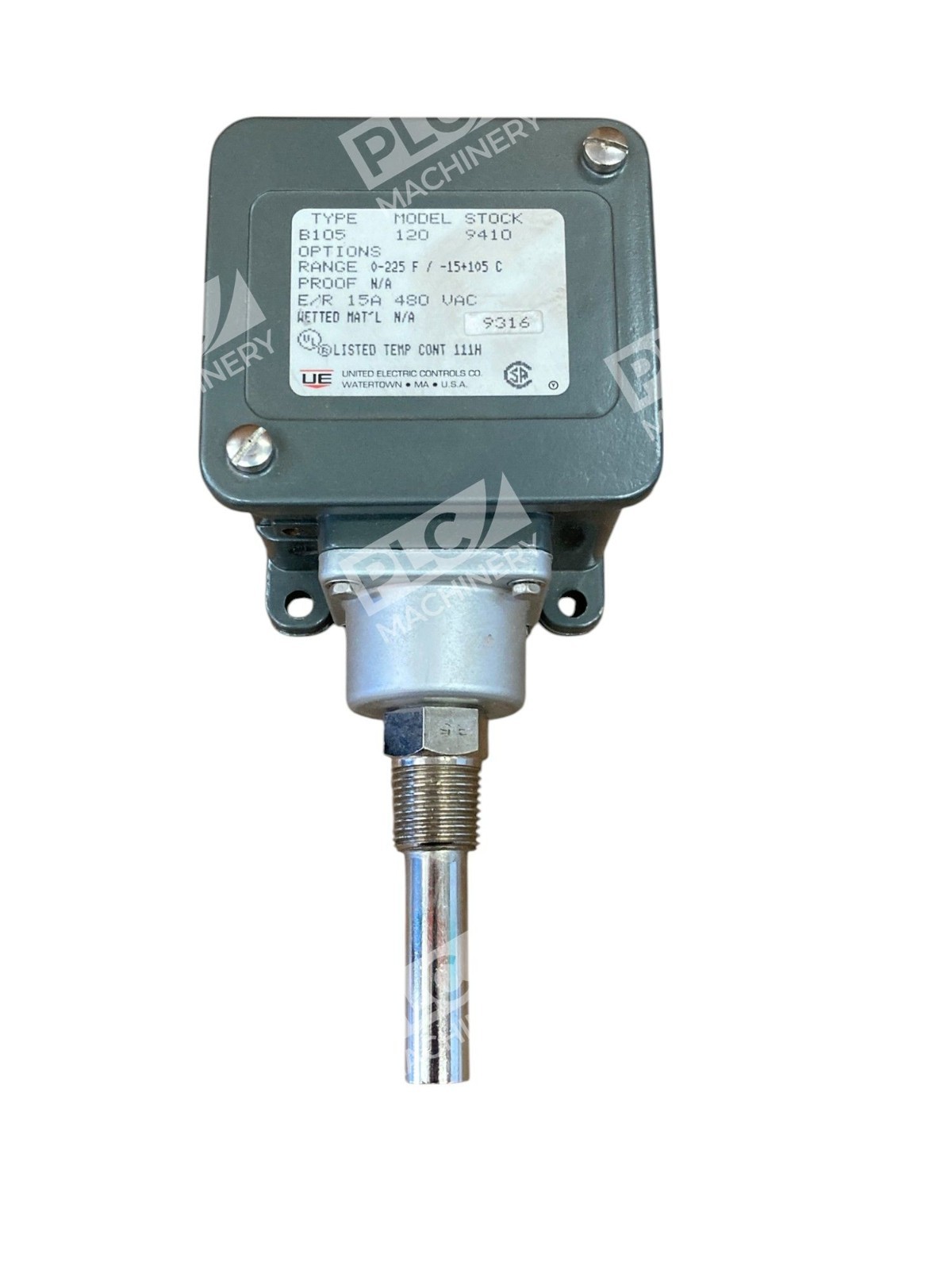
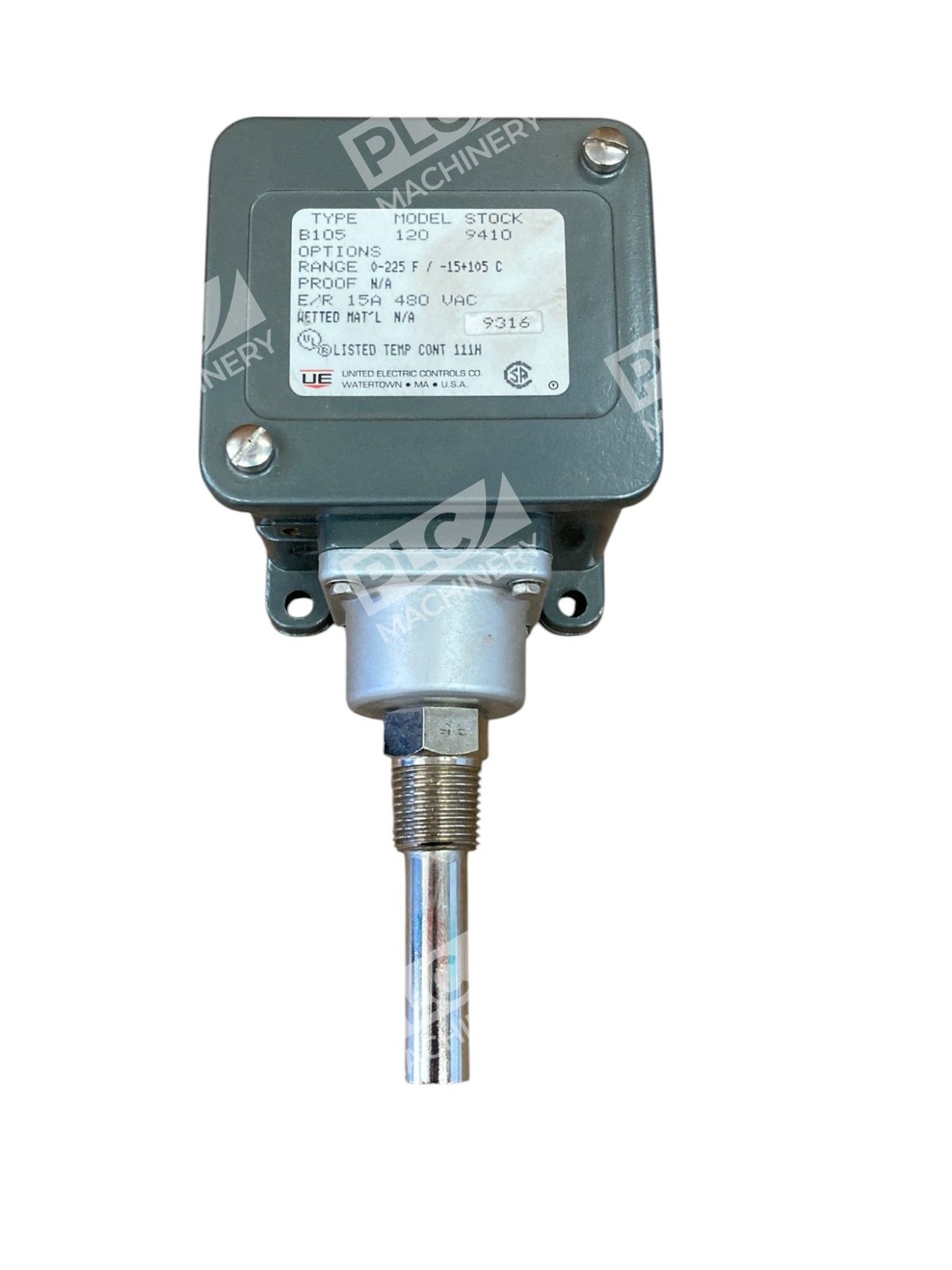
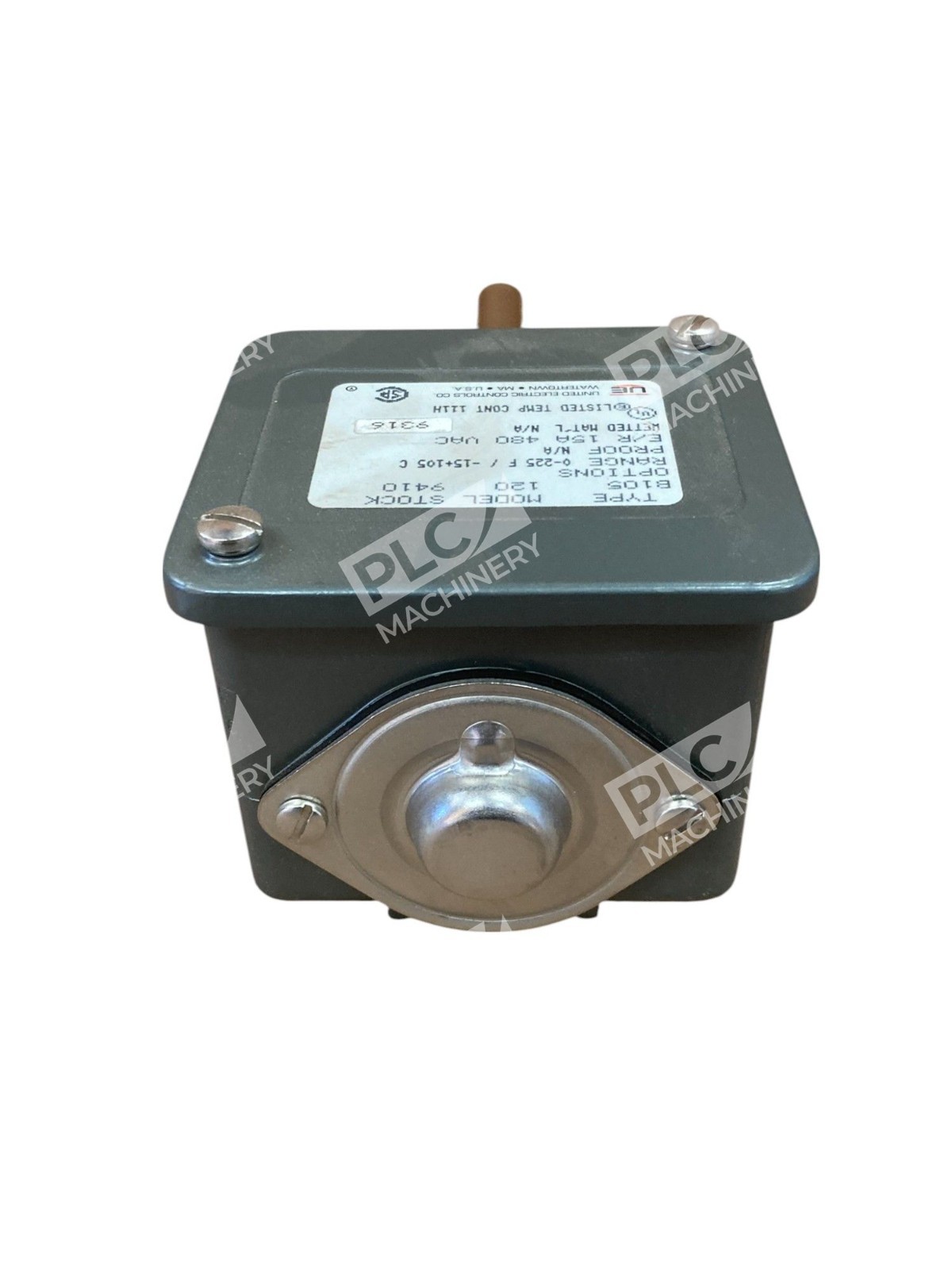
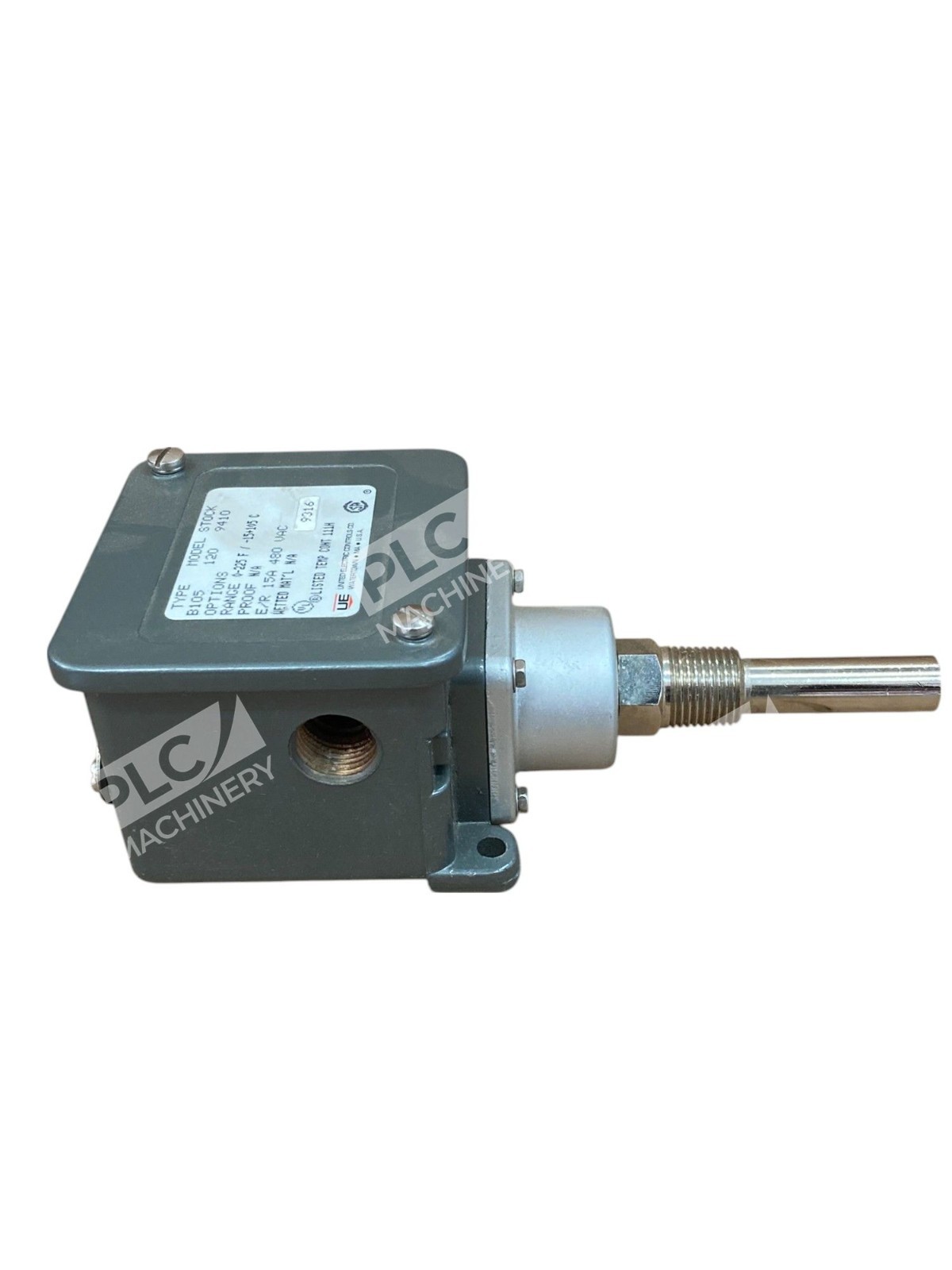


Overview
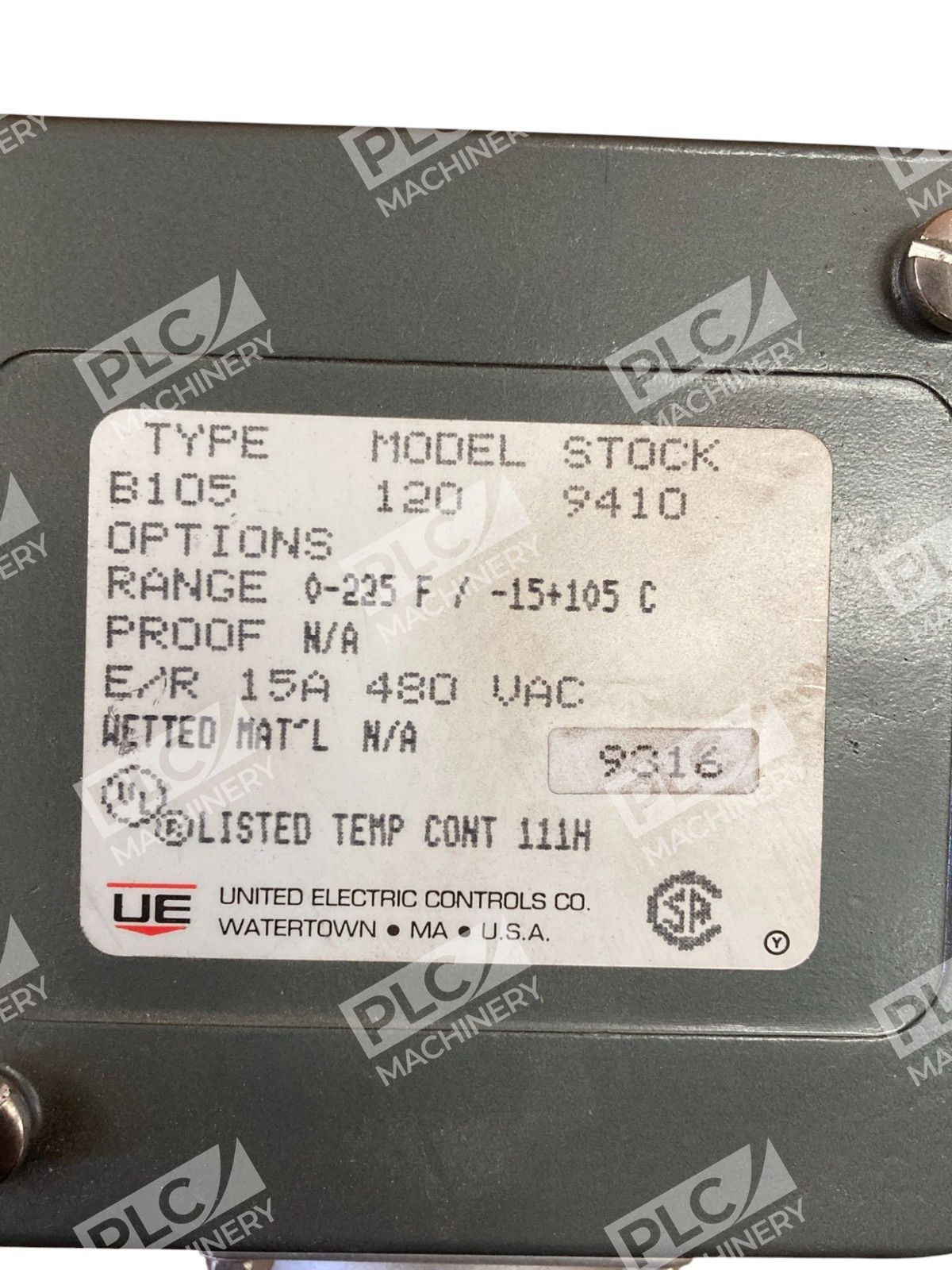
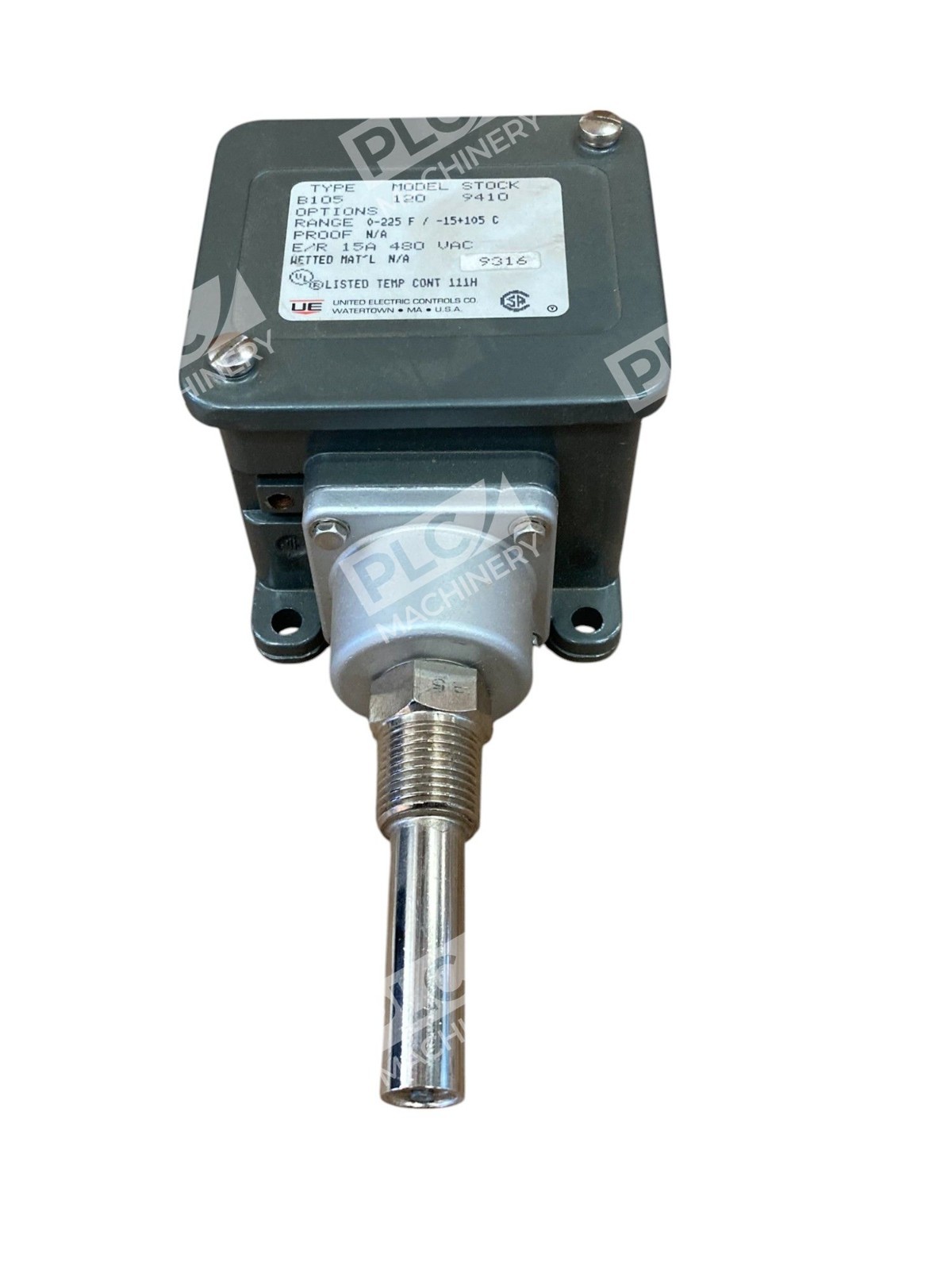
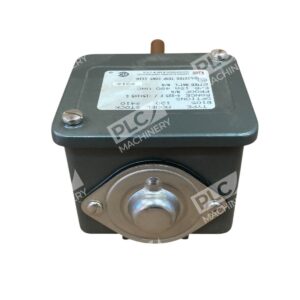
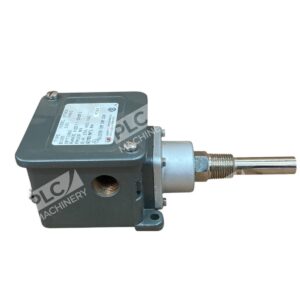
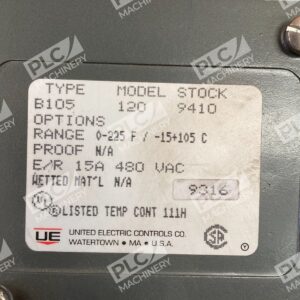
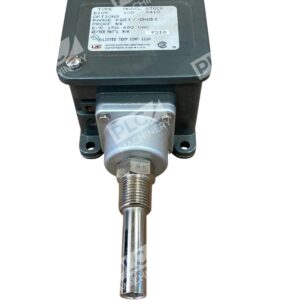
The United Electric B105-120 is a precision temperature controller engineered for HVAC, refrigeration, and industrial temperature regulation. This model features a 0-255°F operating range with robust 15A 480VAC switching capacity, making it suitable for systems requiring reliable temperature setpoint control and protection.
Key Features
- Temperature range: 0–255°F (–15 to 124°C)
- Electrical rating: 15A at 480VAC
- NEMA 4X rated enclosure for durability and moisture resistance
- External dial for easy setpoint adjustment and visual indication
- SPDT (Single Pole Double Throw) contact configuration
- Suited for both heating and cooling applications
Technical Specifications
- Switching capacity: 15 Amperes at 480VAC (resistive load)
- Temperature range: 0–255°F
- Repeatability: ±1% of full scale
- Operating ambient temperature: –40°C to +75°C
- Contact type: SPDT
- Enclosure rating: NEMA 4X stainless steel
- Scale readout: External dial with field-adjustable setpoint
- Approval: UL listed for industrial control applications
Typical Applications
The B105-120 is widely used in:
- HVAC heating and cooling system control
- Refrigeration unit temperature monitoring and switchover
- Industrial process temperature protection
- Chiller and heat pump setpoint regulation
- Walk-in cooler and freezer temperature management
Compatibility & Replacements
Compatible With
- Standard 480VAC industrial control circuits and panels
- Both line-voltage and low-voltage control applications (with appropriate relay interface)
- Common HVAC and refrigeration system wiring and control architectures
- Heating and cooling binary control loops
Replaces / Drop-In Replacement For
- Older United Electric B105 series controllers with equivalent voltage and current ratings
- Similar NEMA 4X rated industrial temperature switches in the 480VAC class
- Direct replacement for B105 model variants with matching electrical specifications and mounting footprint
Works With
- Standard relay logic and hardwired control circuits
- PLC-based HVAC monitoring systems (via discrete I/O contact sense)
- BACnet and LonWorks building automation integrations (through relay interface)
- Pneumatic and electric actuation systems
- Traditional two-point on/off control strategies