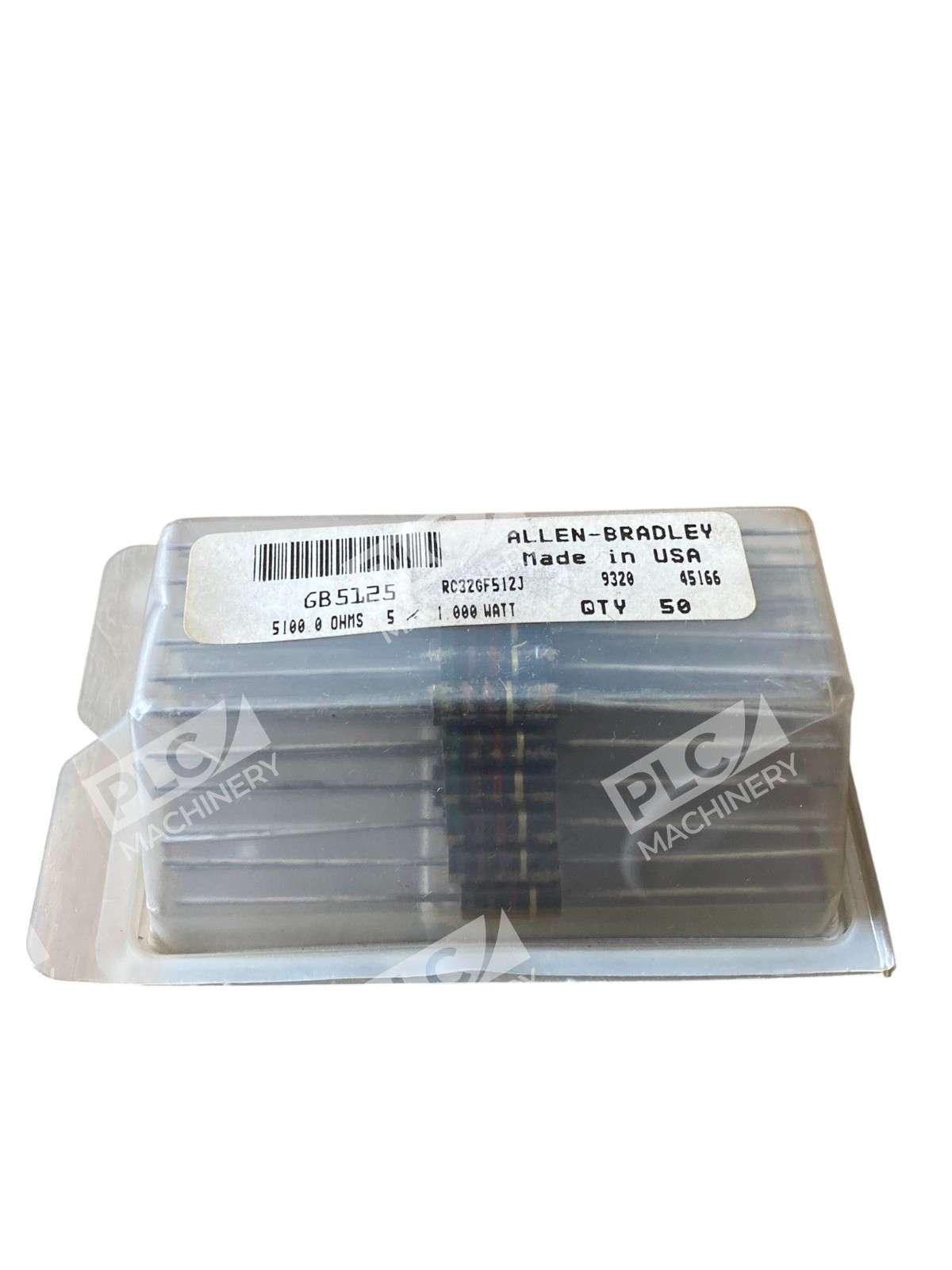
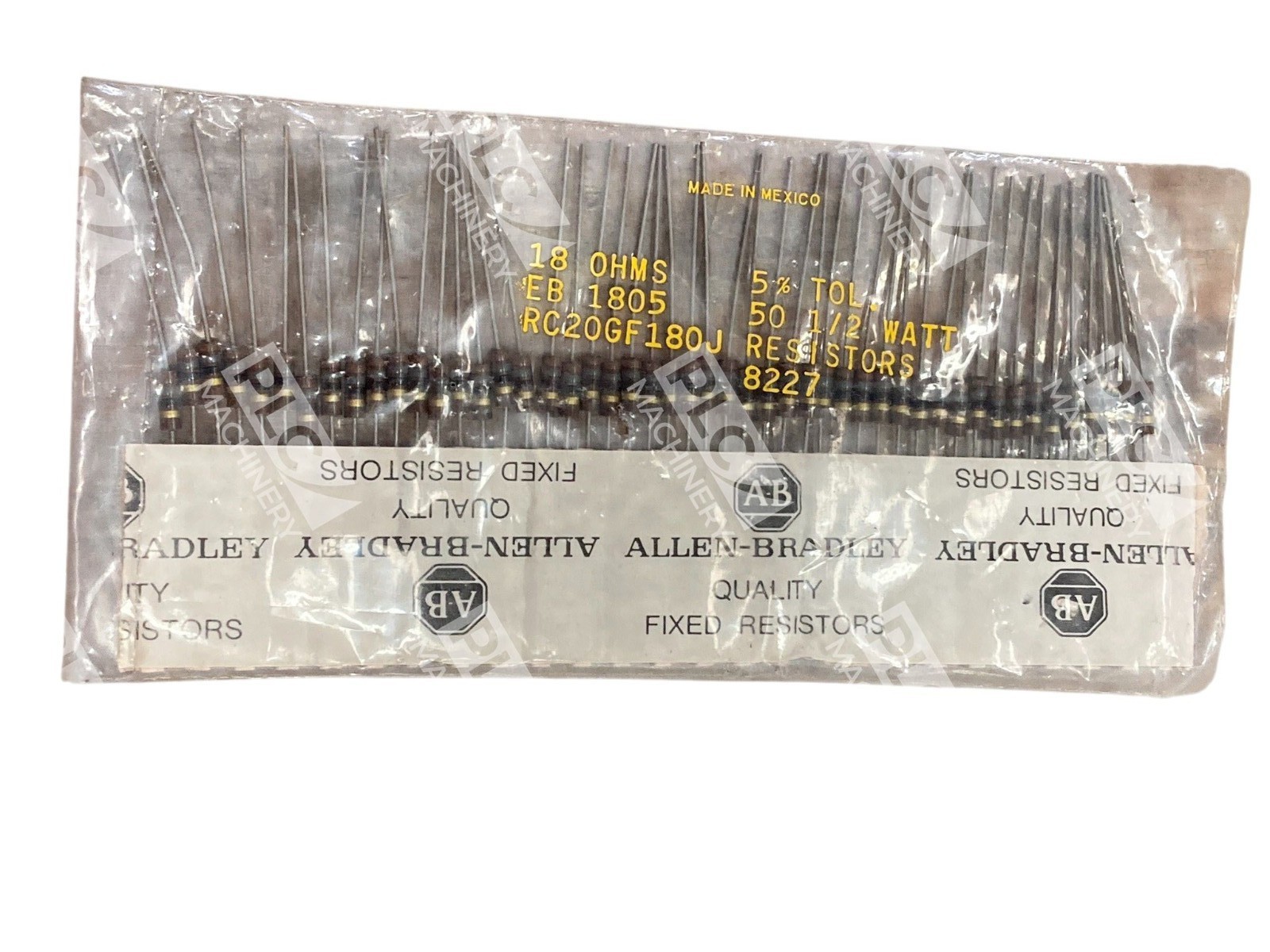
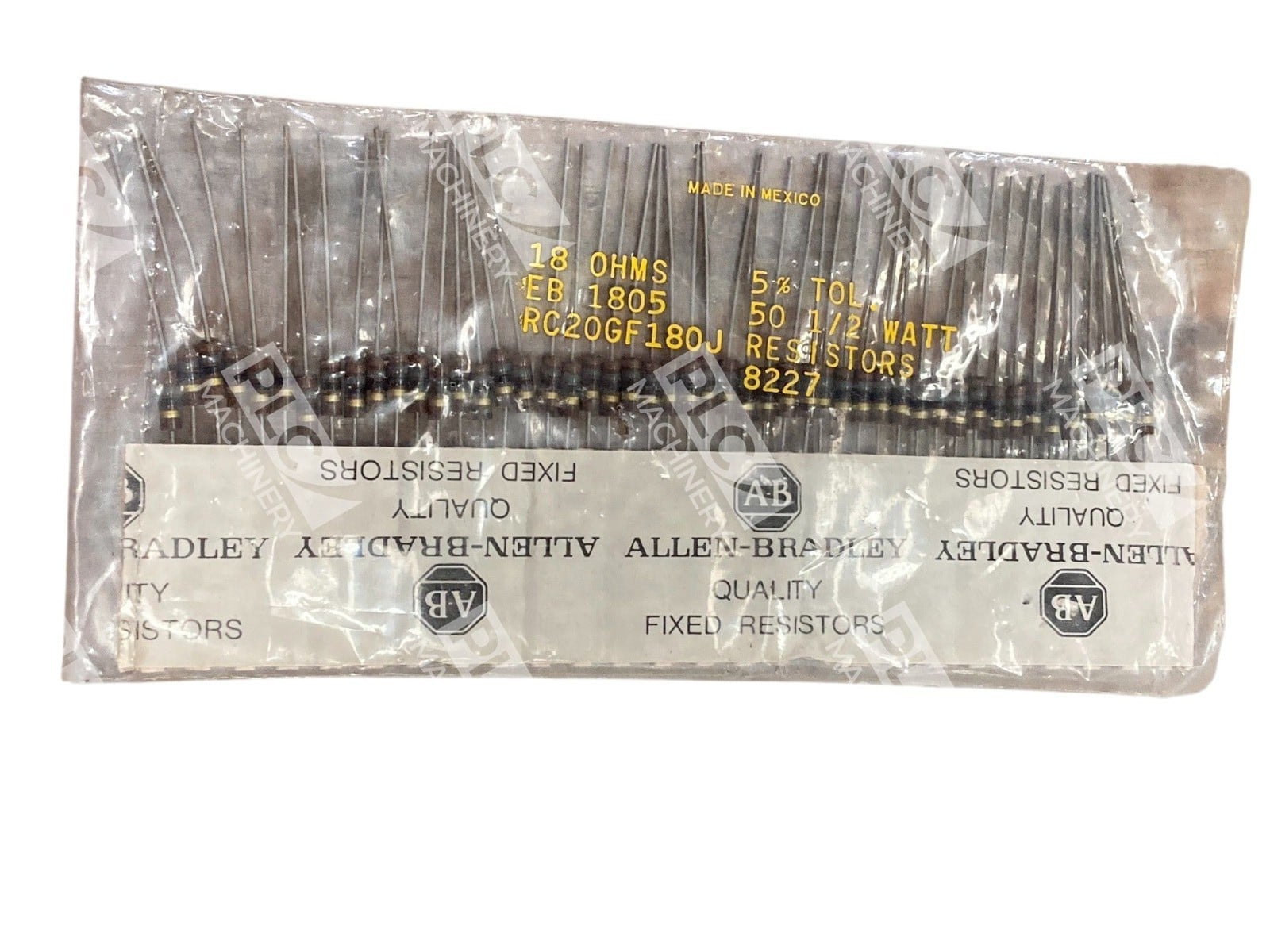
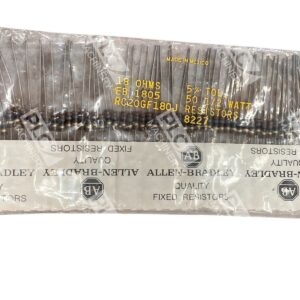
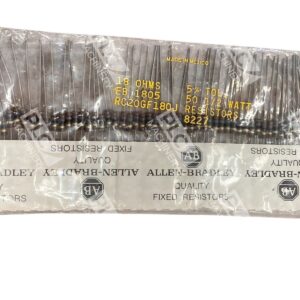
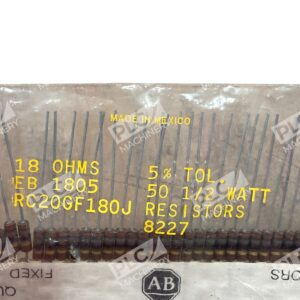
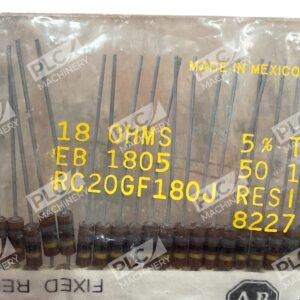


Overview
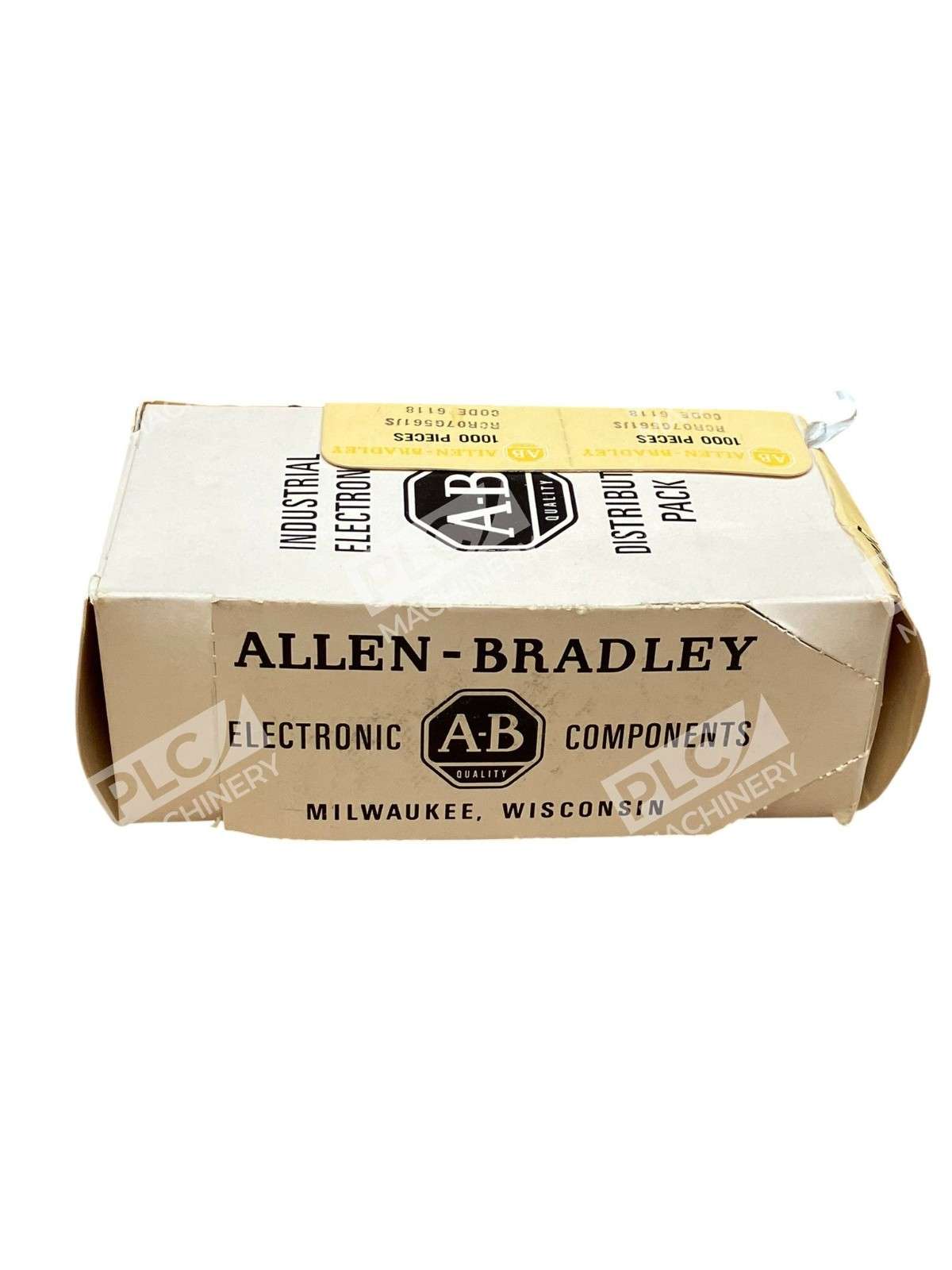
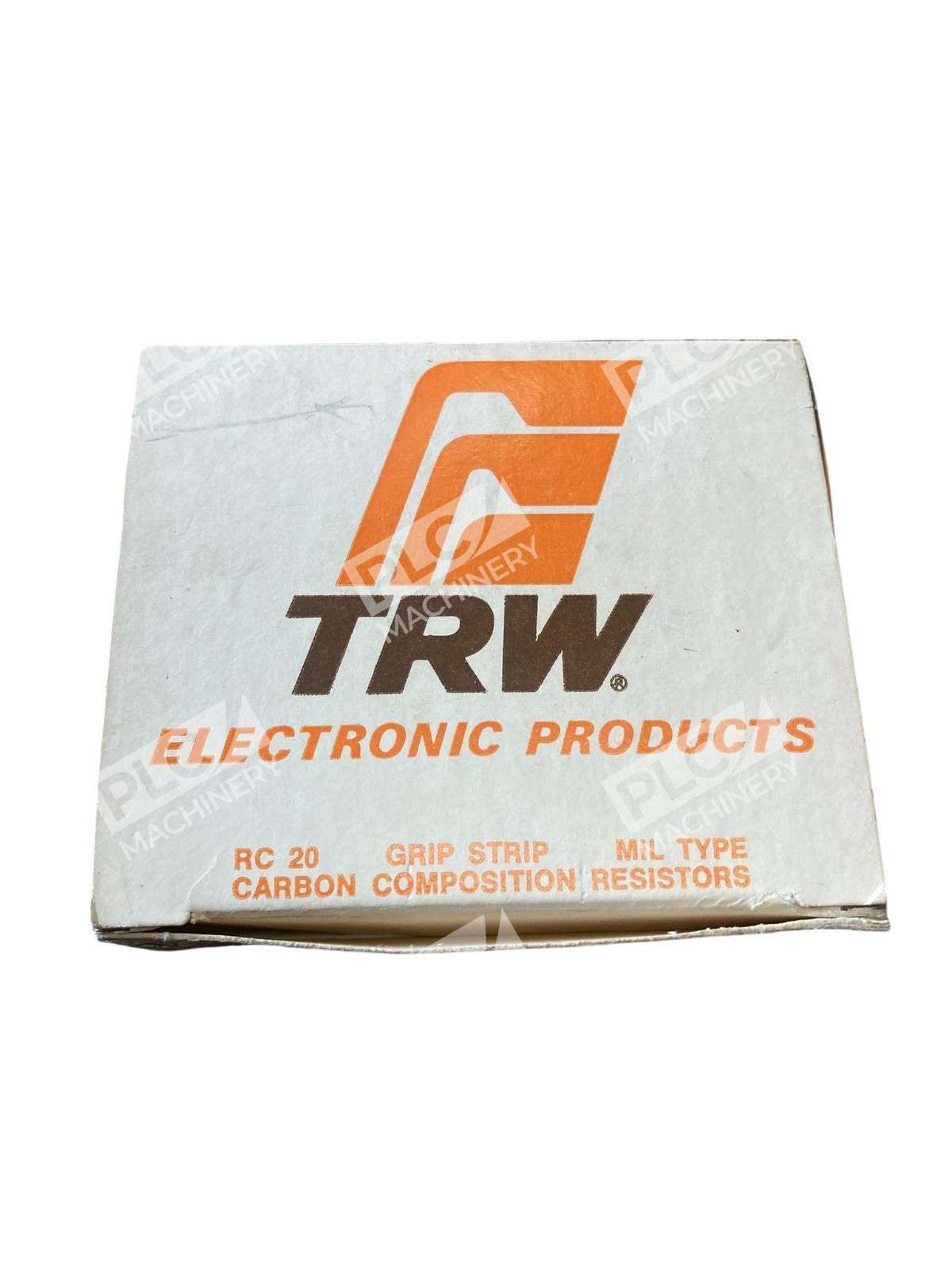
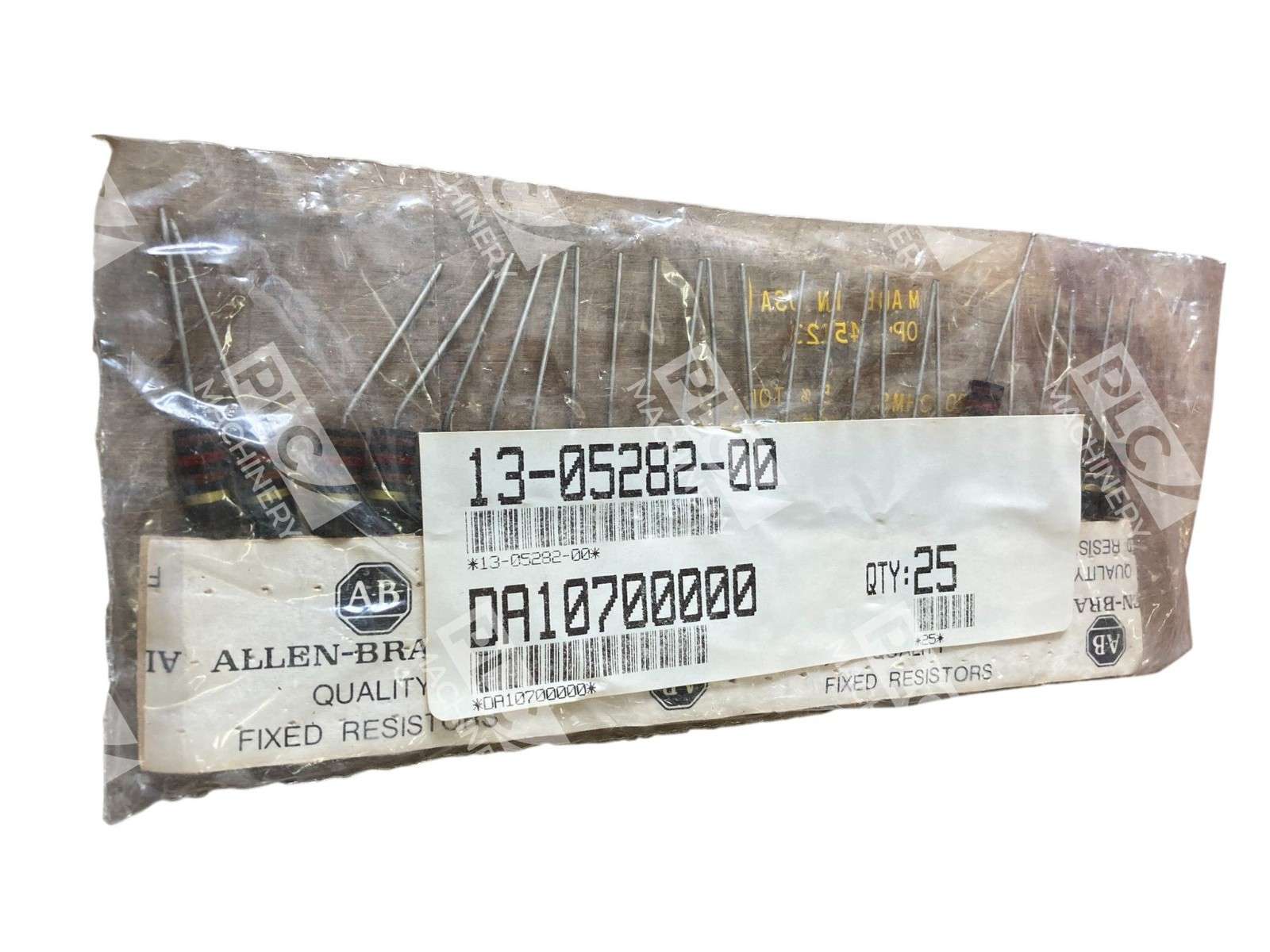
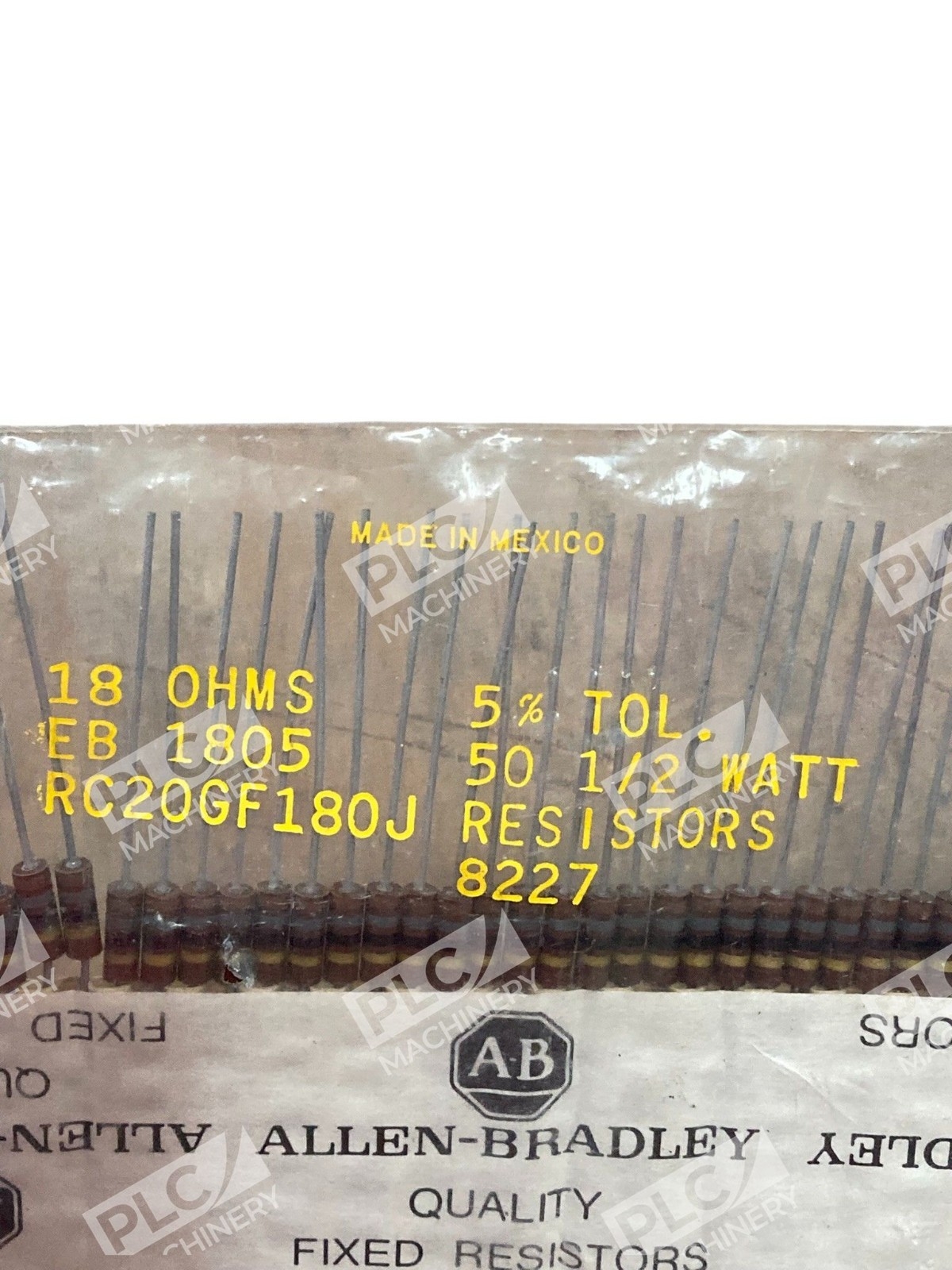
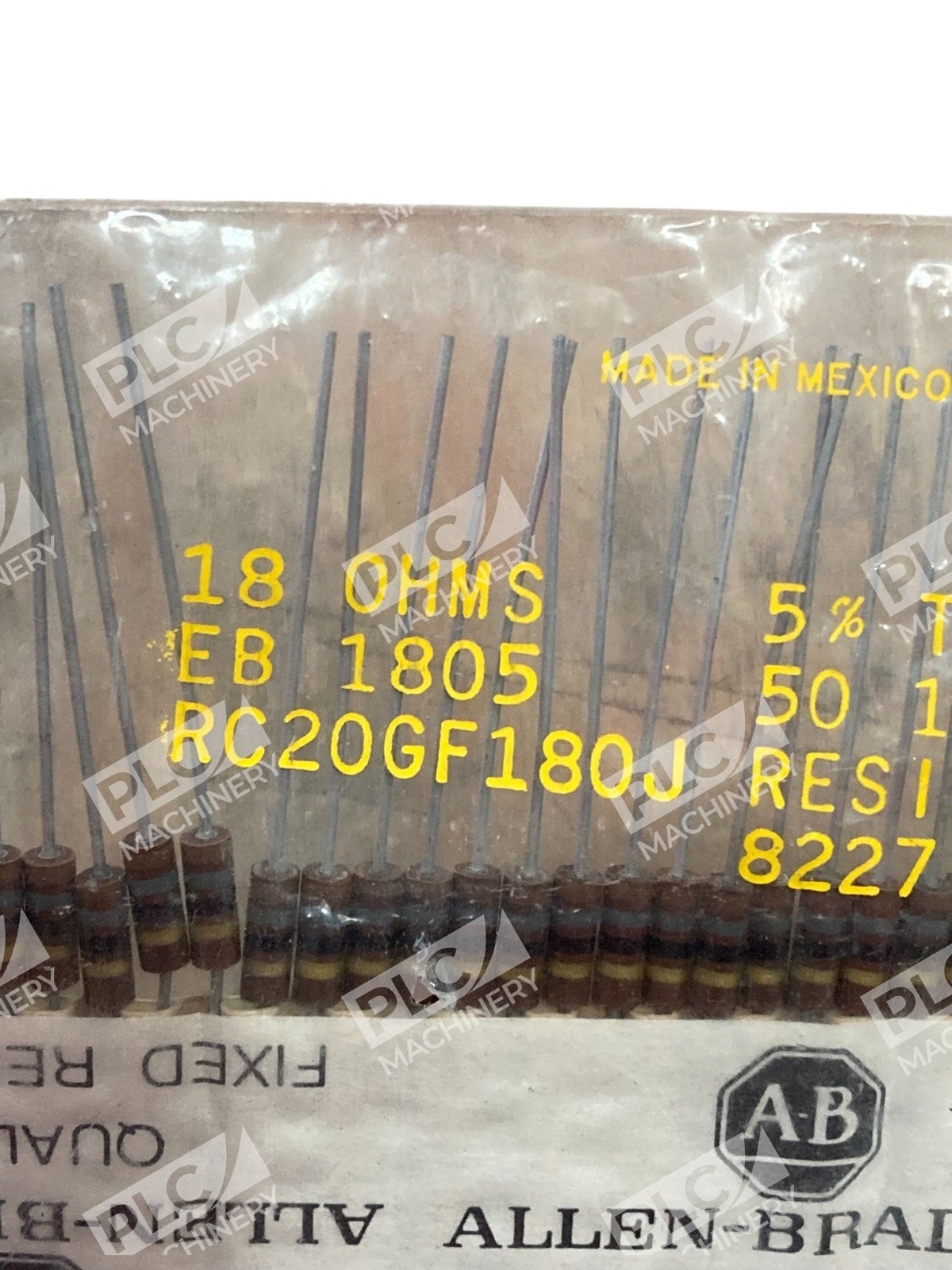
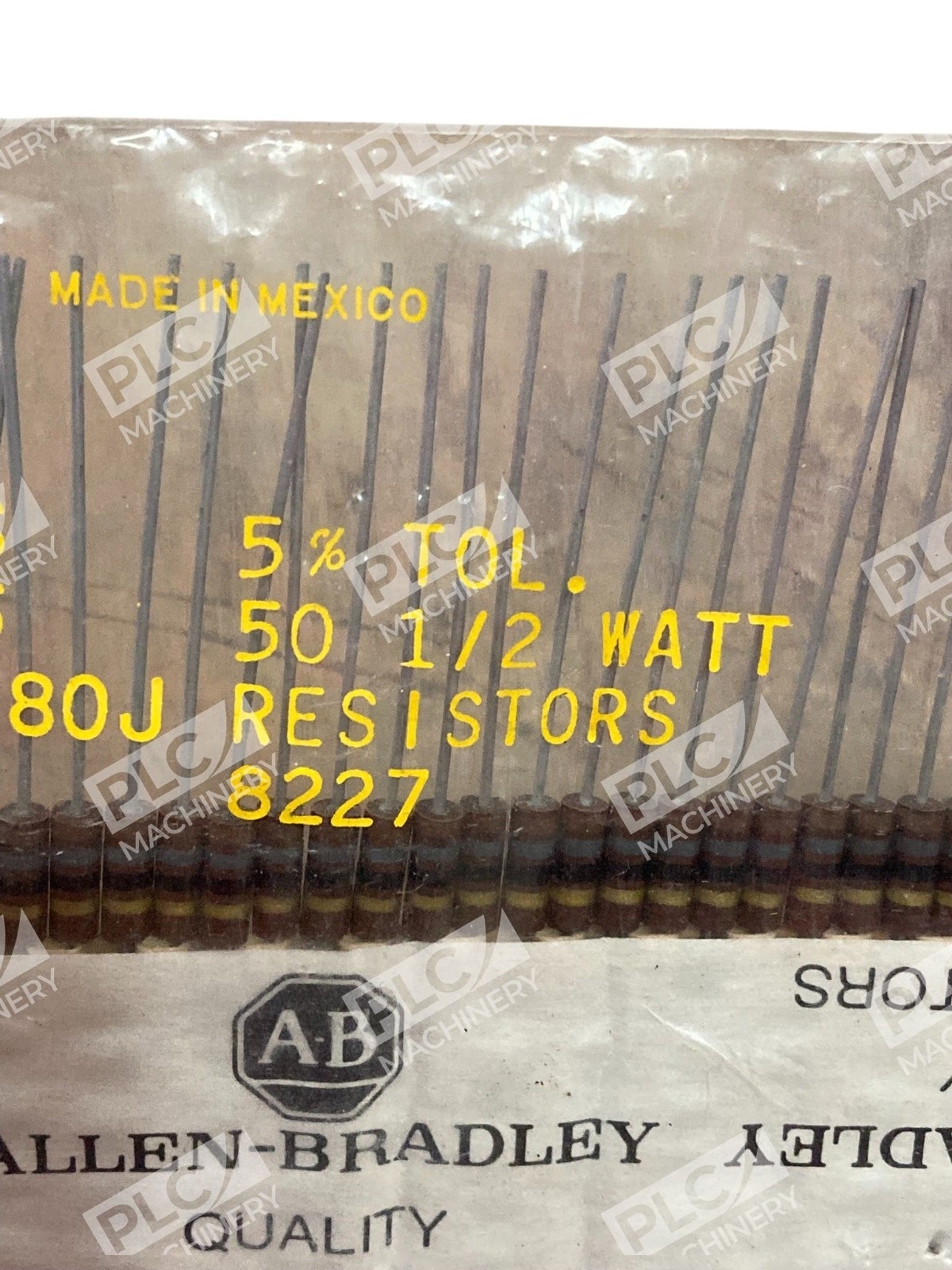
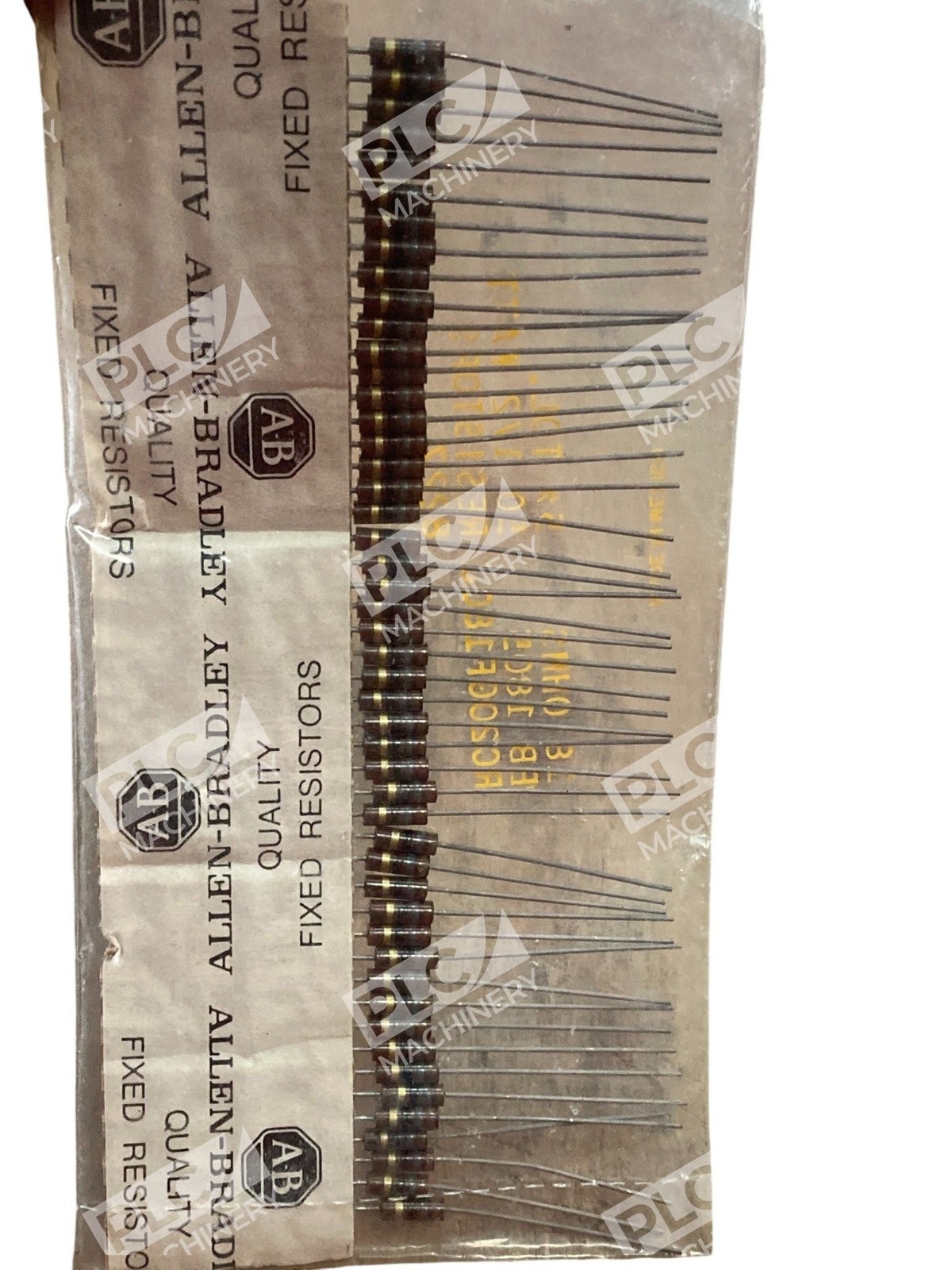
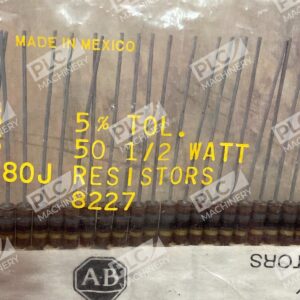
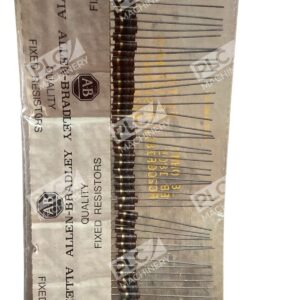
The Allen-Bradley RC20GF180J is a 1/2W (0.5W) carbon composition resistor delivering 18Ω resistance with ±5% tolerance. This axial-leaded component combines rugged construction with stable performance across industrial temperature ranges, making it suitable for discrete component replacement in control cabinets, drives, power supplies, and classic automation equipment. Built to MIL-R-11B and MIL-R-39008 specifications, it offers reliable performance in demanding environments.
Key Features
- Resistance Value: 18Ω at rated conditions
- Power Rating: 1/2W (0.5W) with stable derating above 70°C
- Tolerance: ±5% (gold-band color code)
- Construction: Hot-molded carbon composition with oxygen-free copper leads
- Operating Temperature: Full performance to 70°C ambient; extended range above with deration
- Reliability: MIL-qualified industrial-grade component with low noise and low inductance
Technical Specifications
Refer to the specs table below for complete electrical and physical attributes.
Typical Applications
- Discrete resistor replacement in Allen-Bradley control circuits
- Current-limiting and pull-down resistor networks in logic circuits
- Heater circuits and thermal management subsystems
- Power supply and charger circuits requiring stable low-ohm values
- Industrial automation equipment and retrofit projects
- Legacy PLC input/output card conditioning networks
Compatibility & Replacements
Compatible With
- Allen-Bradley CompactLogix, ControlLogix, and SLC 500 control systems
- Classic and modern industrial control cabinets using discrete components
- Siemens SIMATIC S7 legacy systems with component-level repair
- Mitsubishi and Omron automation equipment requiring resistor spares
- General-purpose industrial power supplies and motor control circuits
Replaces / Drop-In Replacement For
- Other RC20GF180J units (direct equivalent)
- Verify exact compatibility with your system integrator or controls engineer before ordering for critical applications
Works With
- Standard 0.1″ and 0.2″ breadboard and PCB layouts
- Axial component footprints in industrial control schematics
- Manual circuit design and breadboarding workflows
- No software platform required—passive component for all automation systems