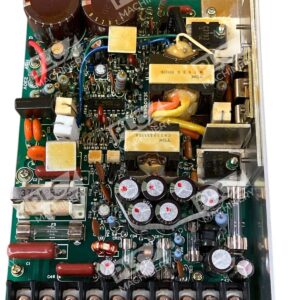



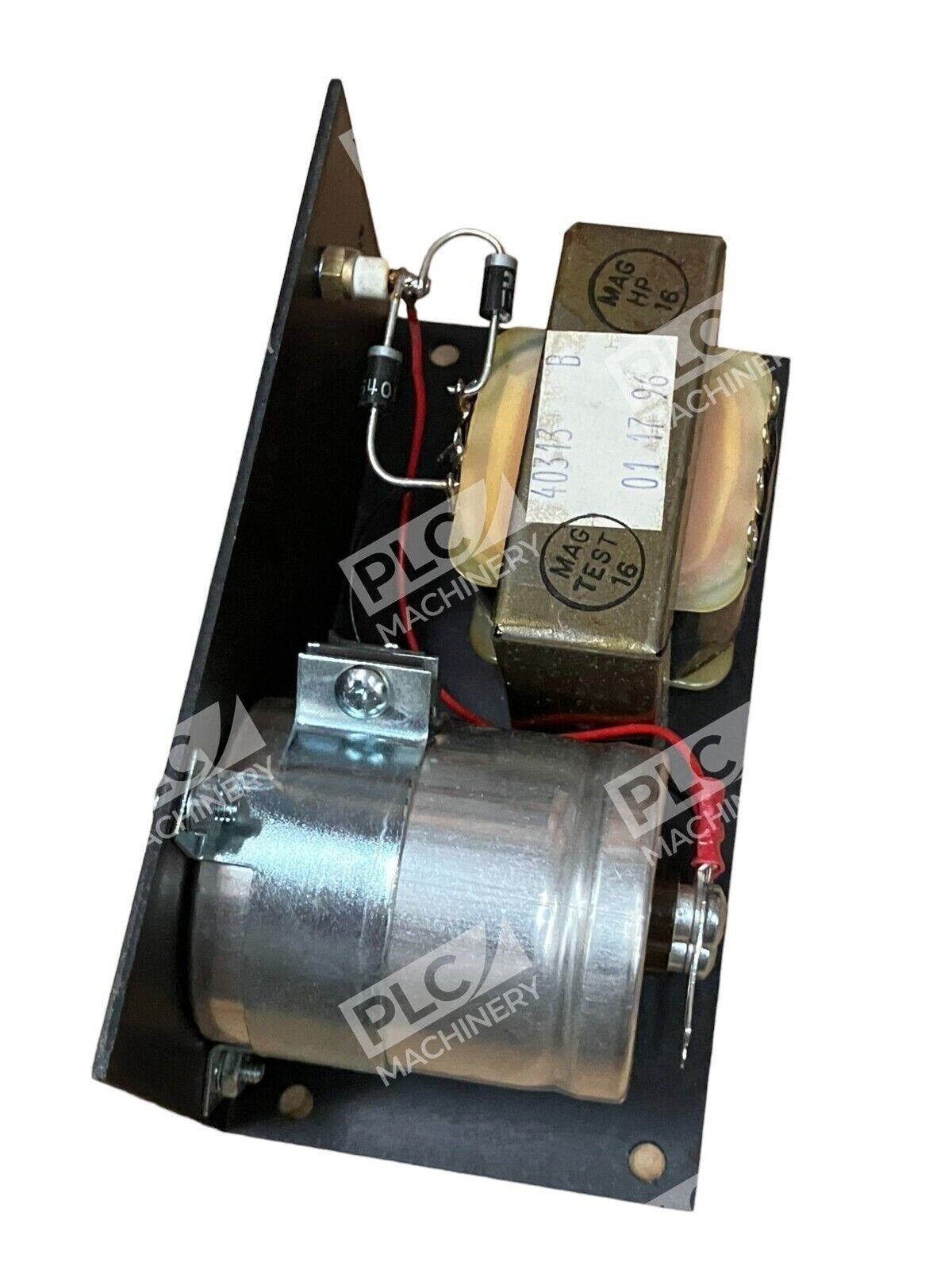
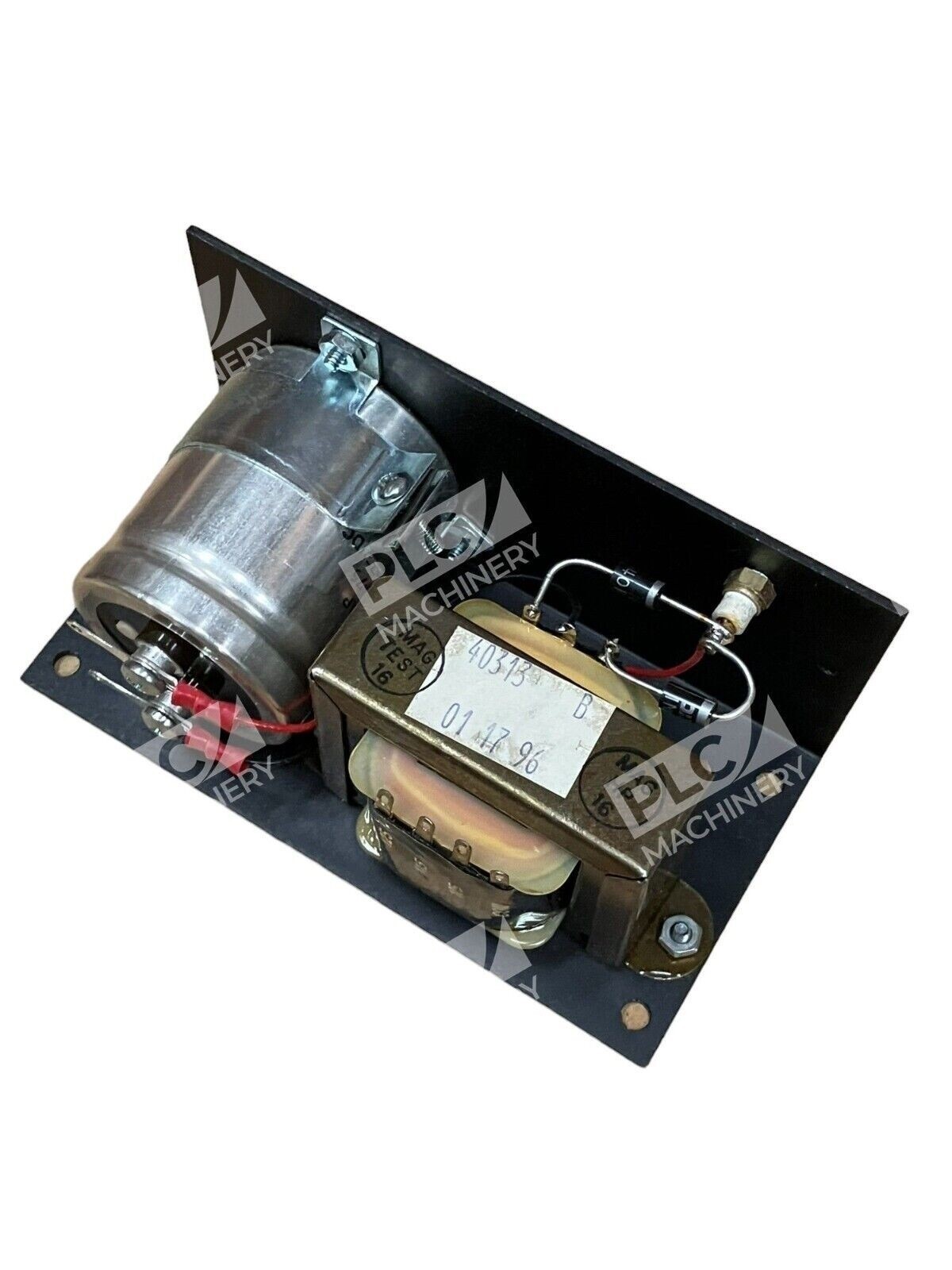





Overview
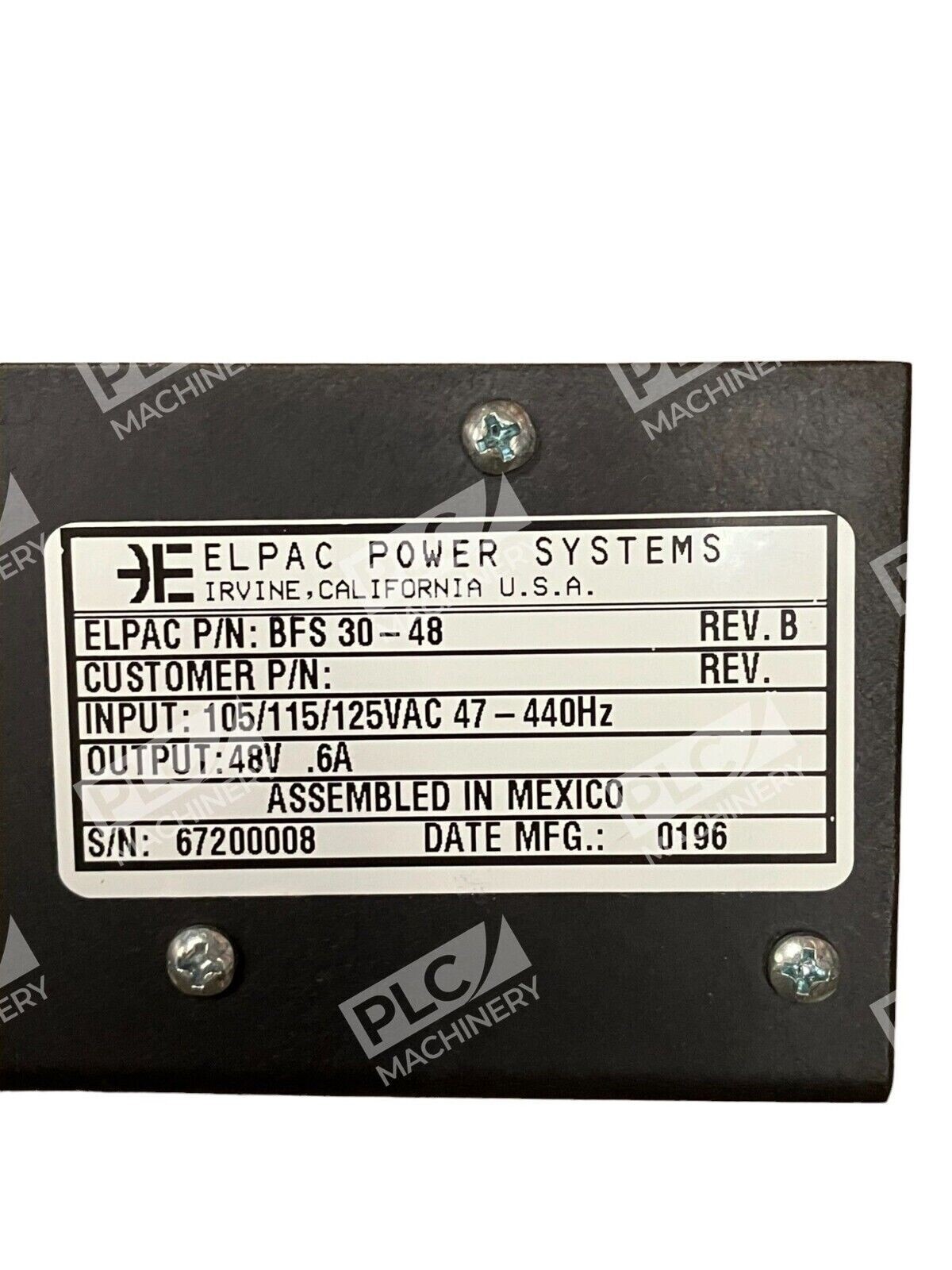
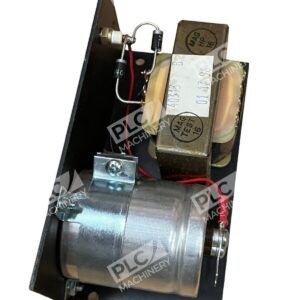
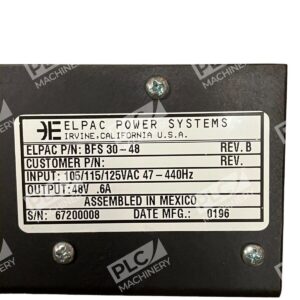
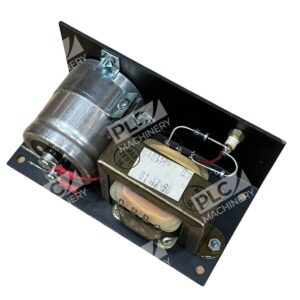
The Elpac Power Systems BFS 30-48 Rev B is a regulated adjustable power supply engineered for laboratory, test, and industrial applications. With 30V nominal output and 6A maximum current capacity, this supply offers dependable performance for precision measurement equipment, signal conditioning, and bench testing environments. The Rev B revision reflects Elpac’s design refinement for improved stability and thermal management.
Key Features
- Adjustable output voltage for flexible application requirements
- Maximum output of 30V DC at 6A current capacity
- Compact form factor suitable for bench and rack mounting
- Regulated output for stable signal conditioning
- Built for test, measurement, and inspection applications
Technical Specifications
The BFS 30-48 Rev B delivers consistent power delivery across typical industrial and laboratory operating conditions:
- Output Voltage: 30V DC (adjustable)
- Maximum Output Current: 6A
- Power Output: 180W nominal
- Regulation: Regulated DC output
- Connector Type: Industrial-grade terminals (typical for Elpac BFS series)
Typical Applications
- Laboratory power sourcing for test equipment
- Precision measurement and instrumentation
- Signal source and conditioning circuits
- Industrial control system power backup and auxiliary circuits
- Equipment commissioning and troubleshooting
Compatibility & Replacements
Compatible With
- Industrial control systems requiring 30V auxiliary power
- Test and measurement equipment in 24–48V DC range
- Signal conditioning and low-voltage control circuits
- Standard laboratory benches and rack cabinets
Replaces / Drop-In Replacement For
- Elpac Power Systems BFS 30-48 Rev A and earlier revisions
- Other Elpac BFS 30V series units with compatible pinout (verify before ordering)
Works With
- Standard power distribution and DIN rail mounting systems
- Industrial test benches and laboratory equipment racks
- Custom signal conditioning and measurement circuits
- Verify compatibility with your system integrator before ordering for specific integration requirements.