

Overview
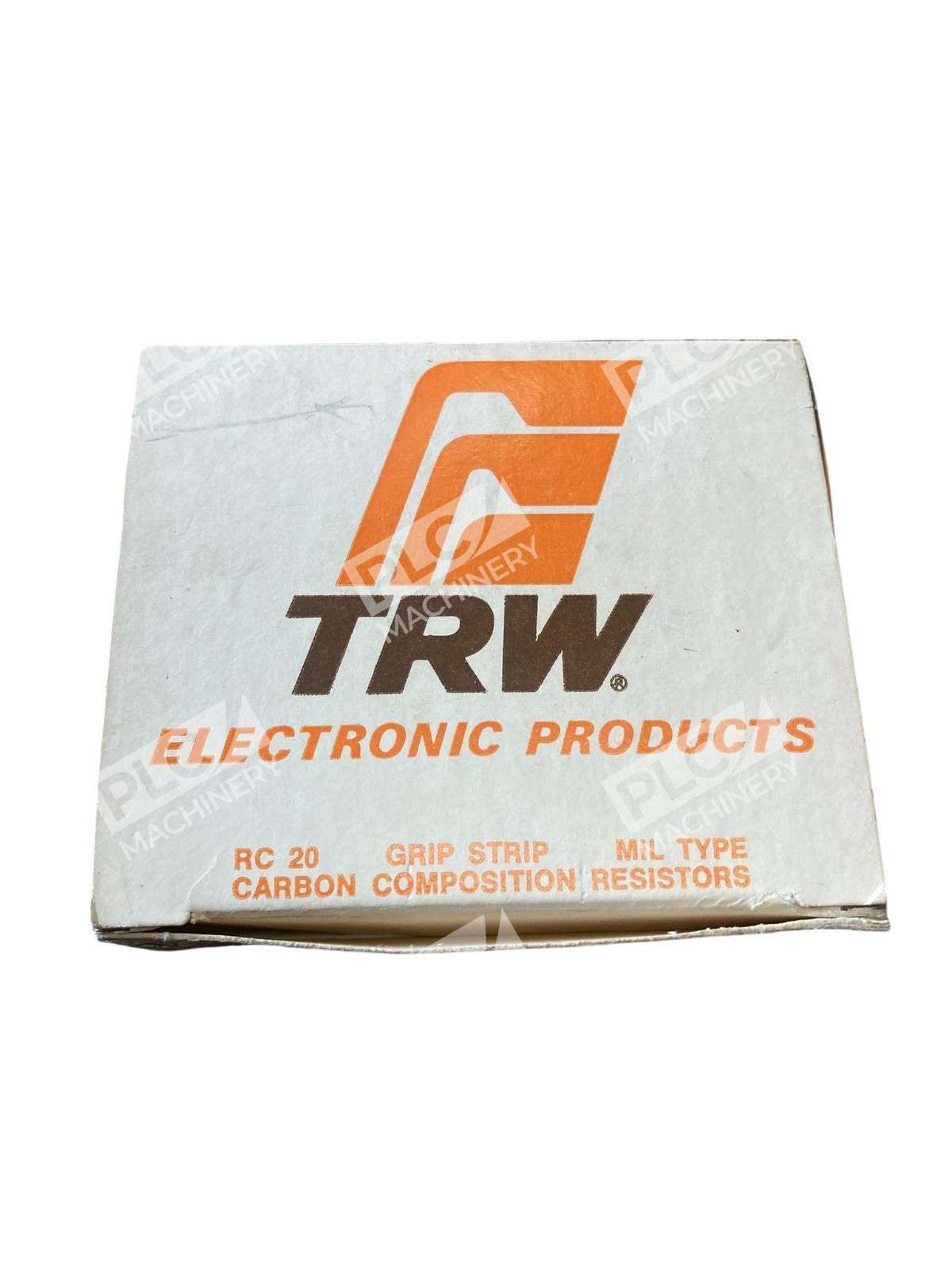
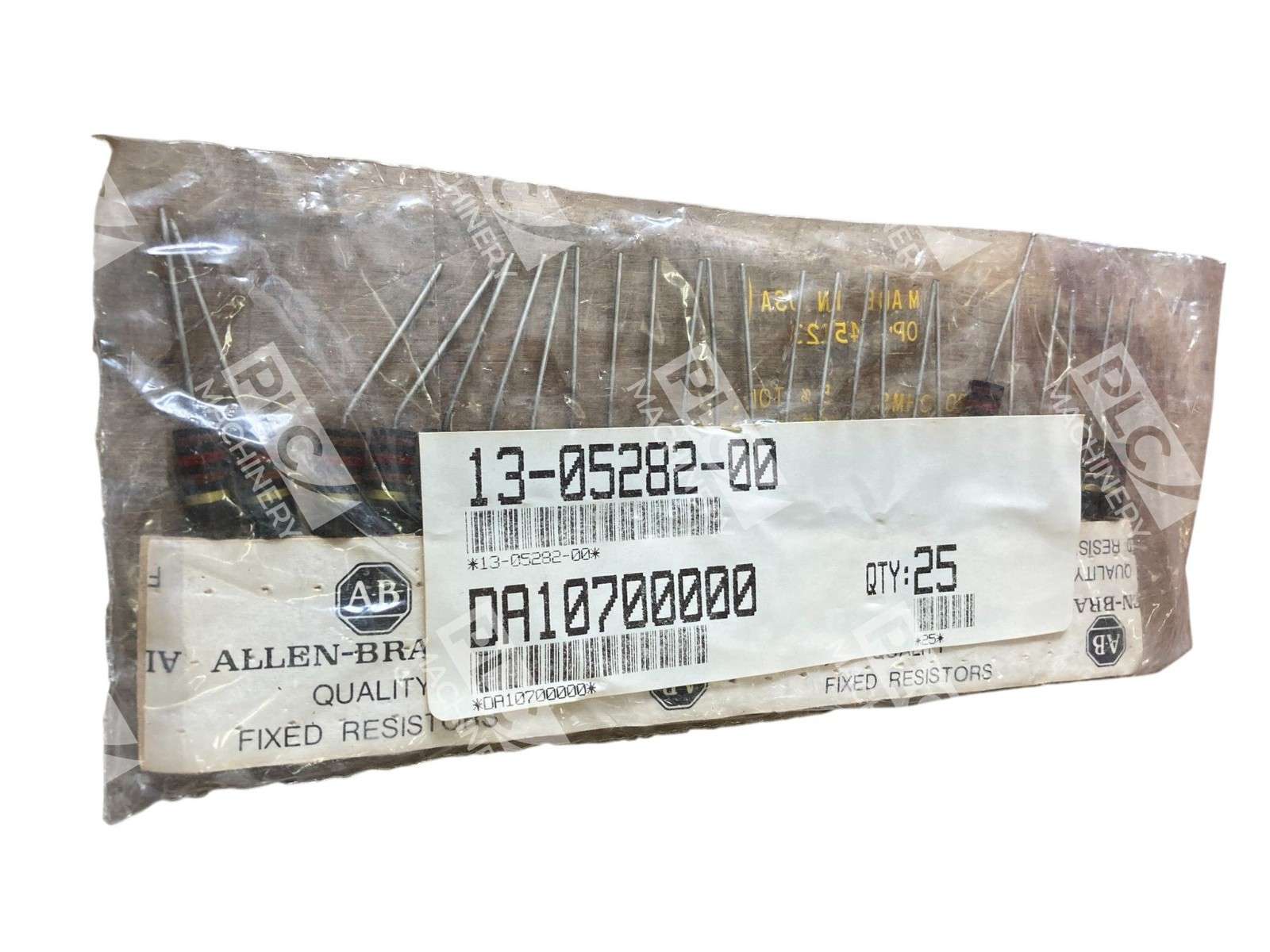
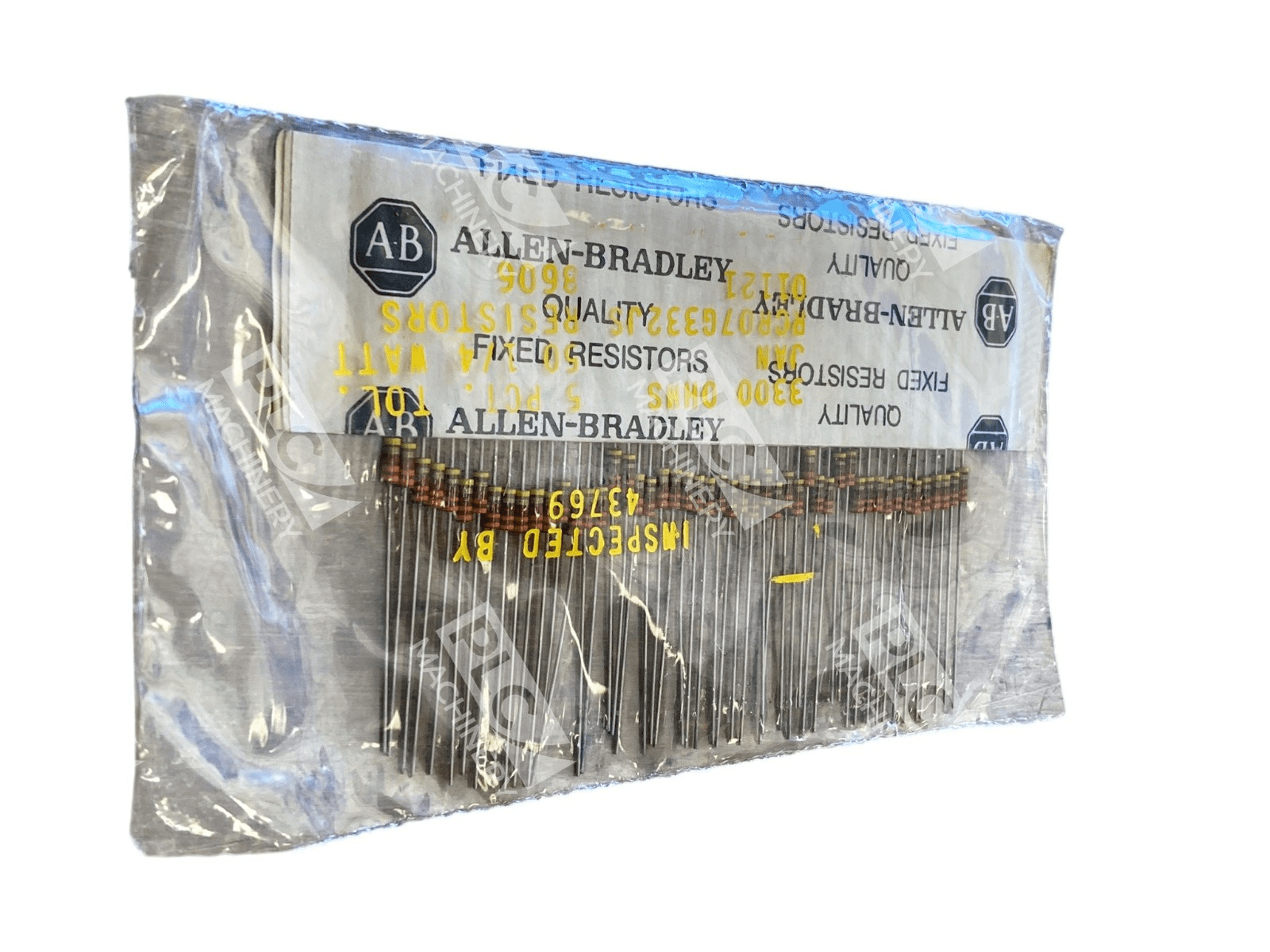
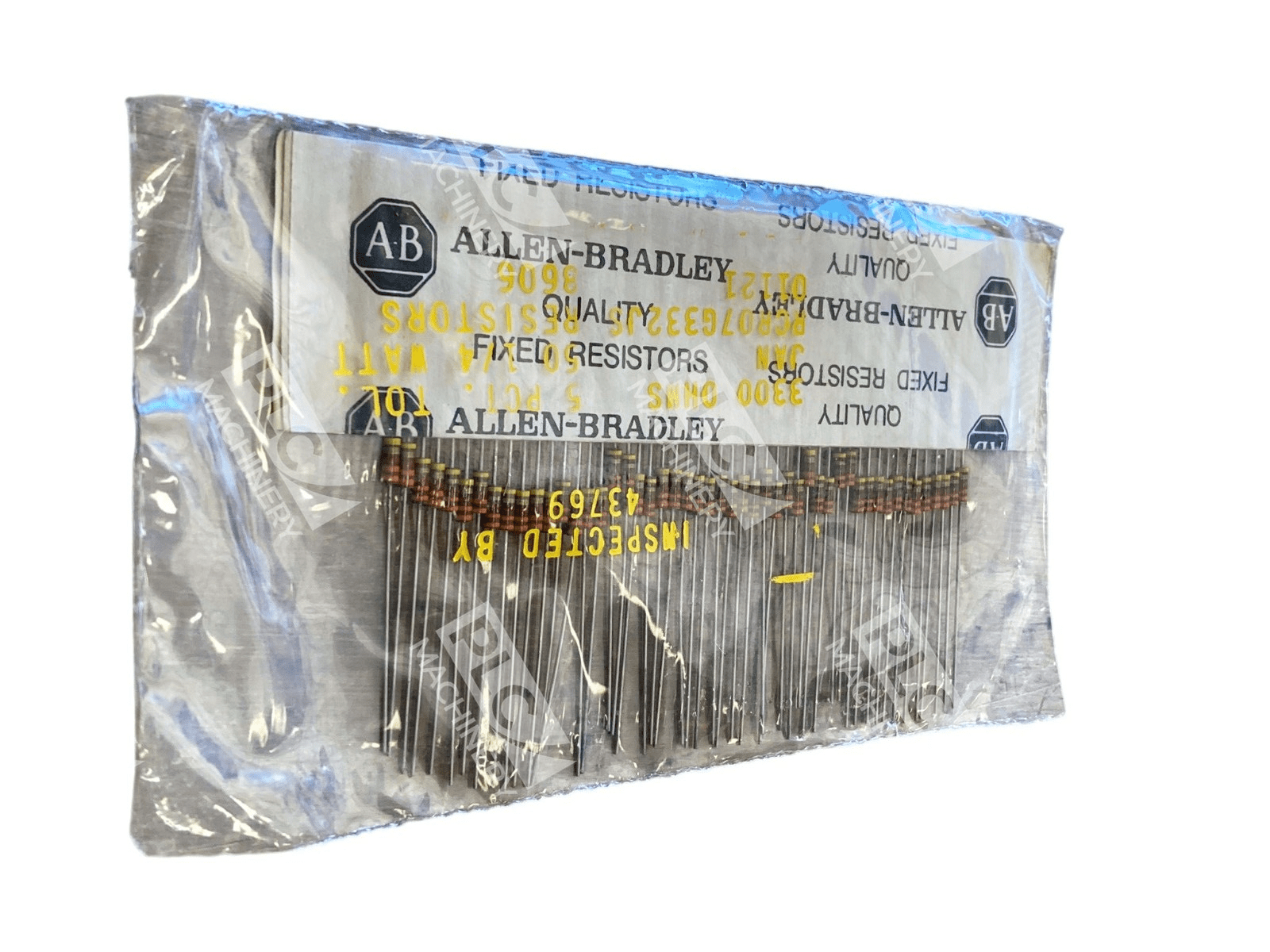
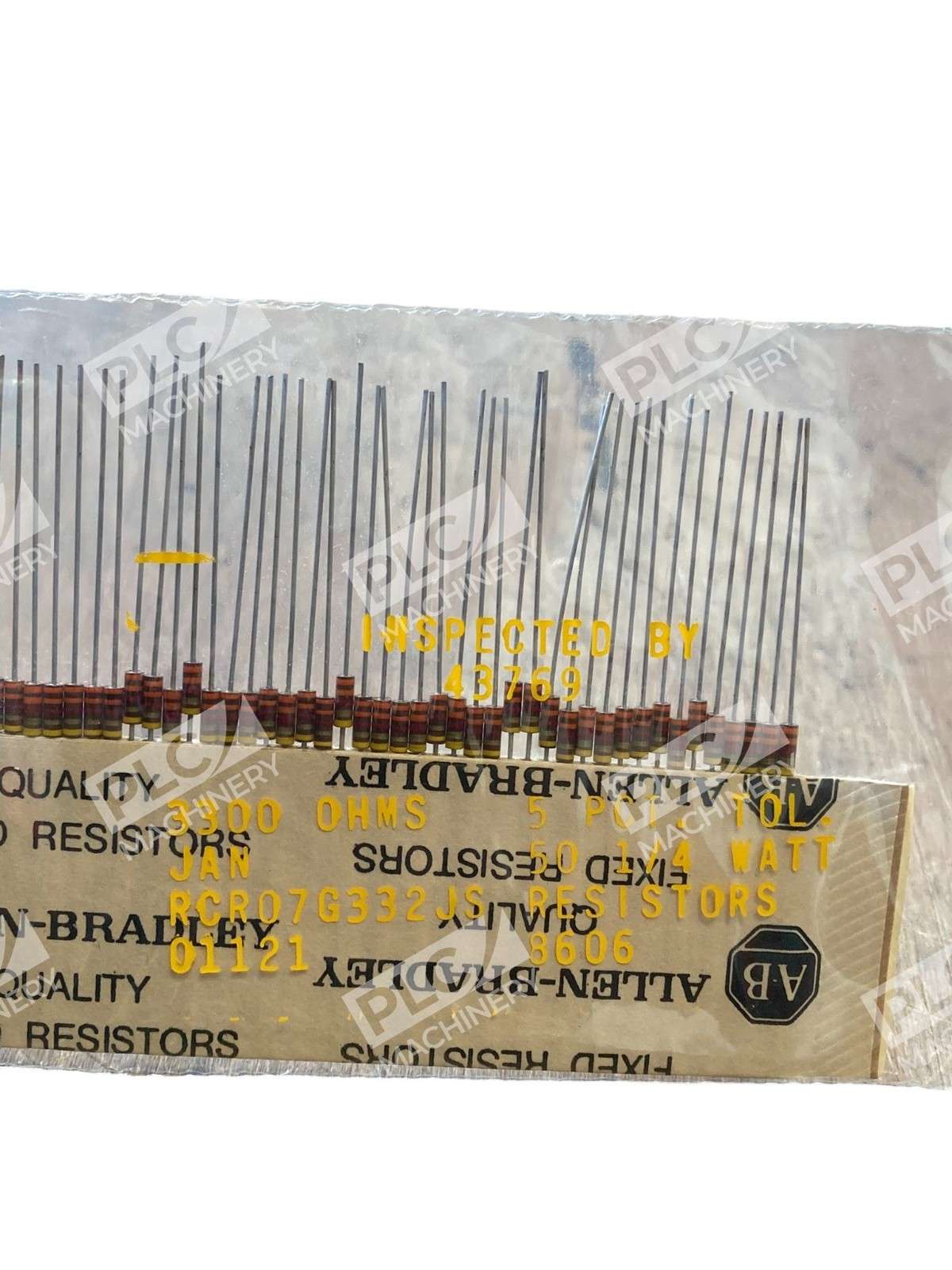
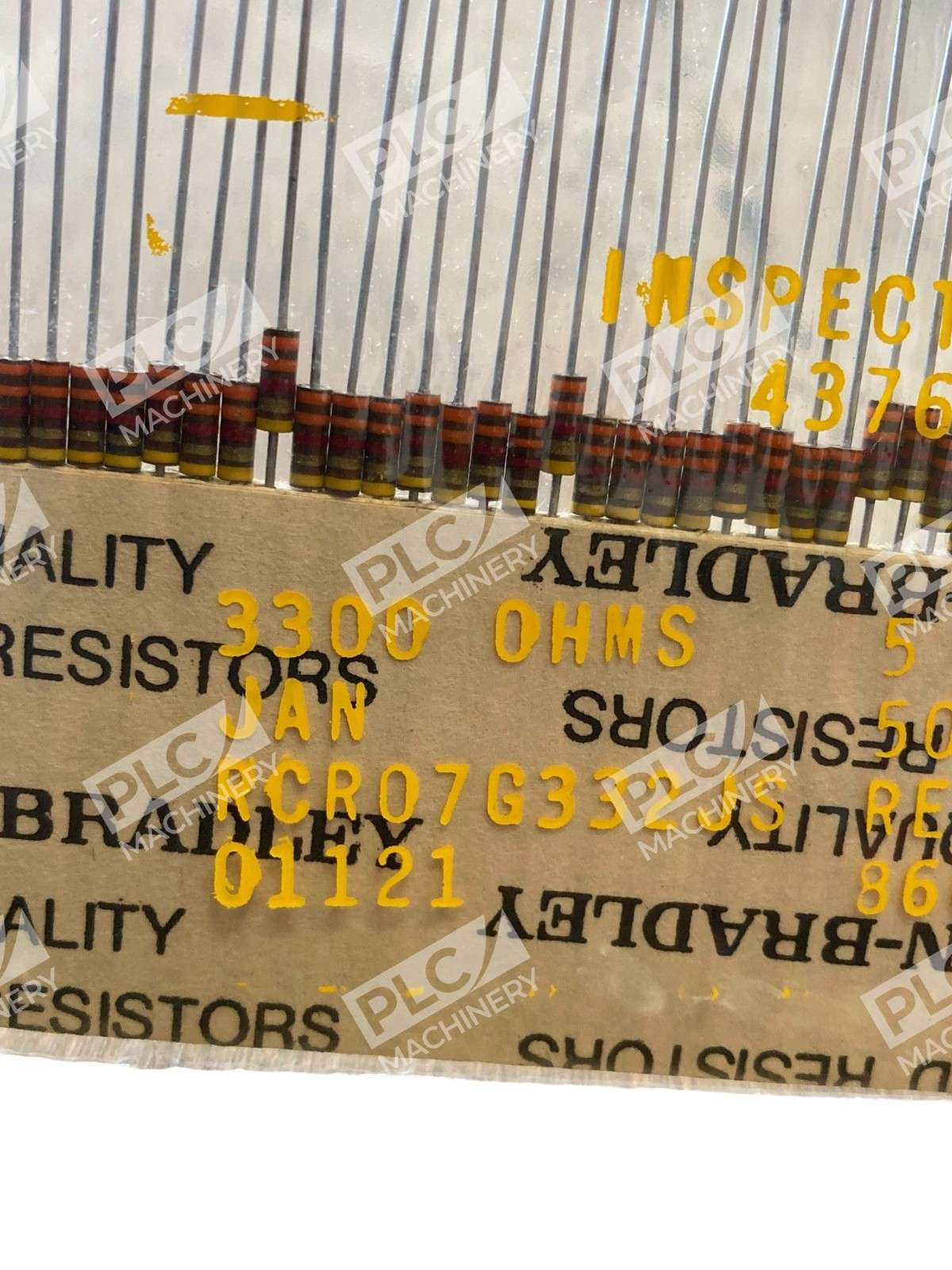
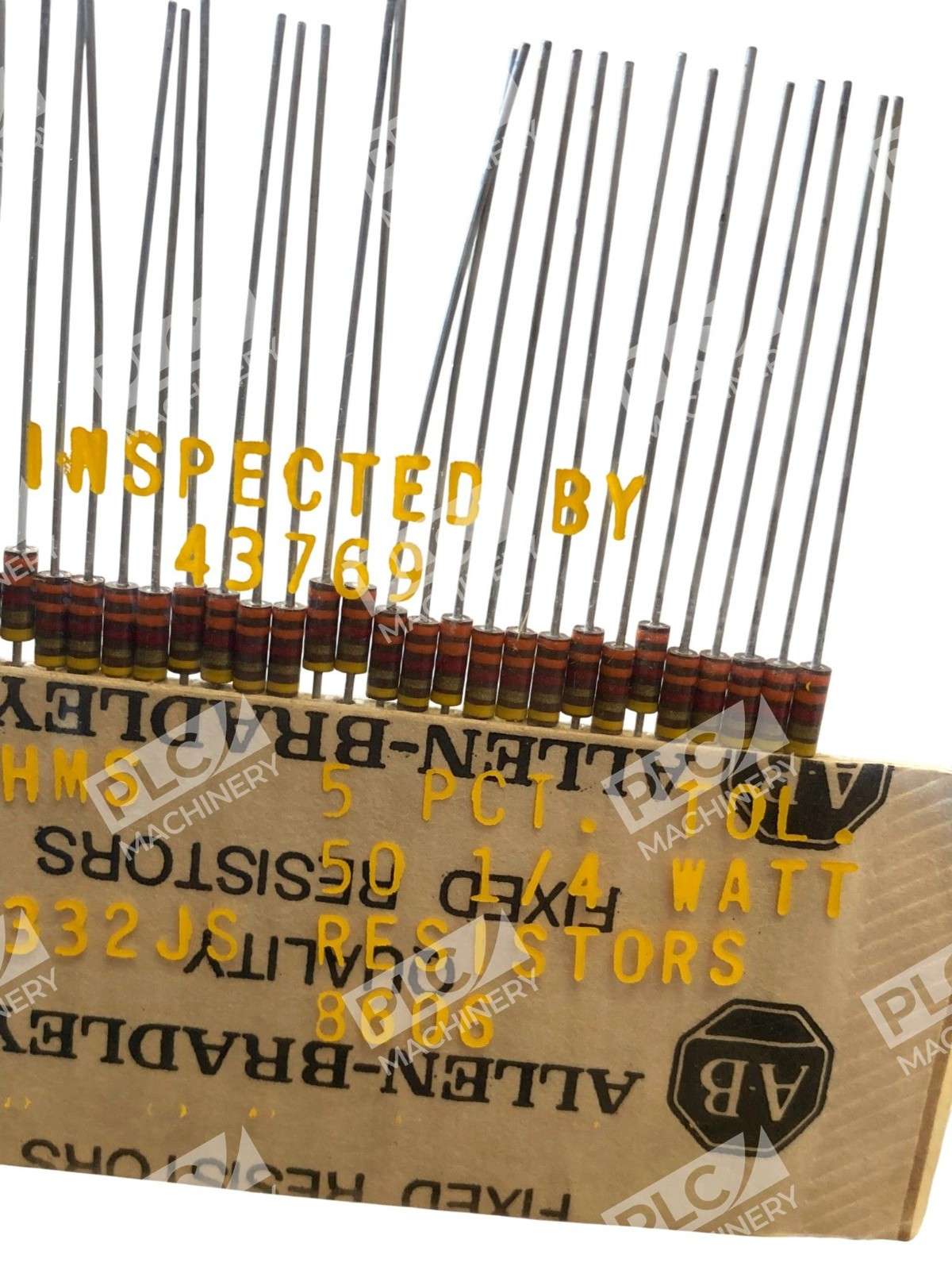
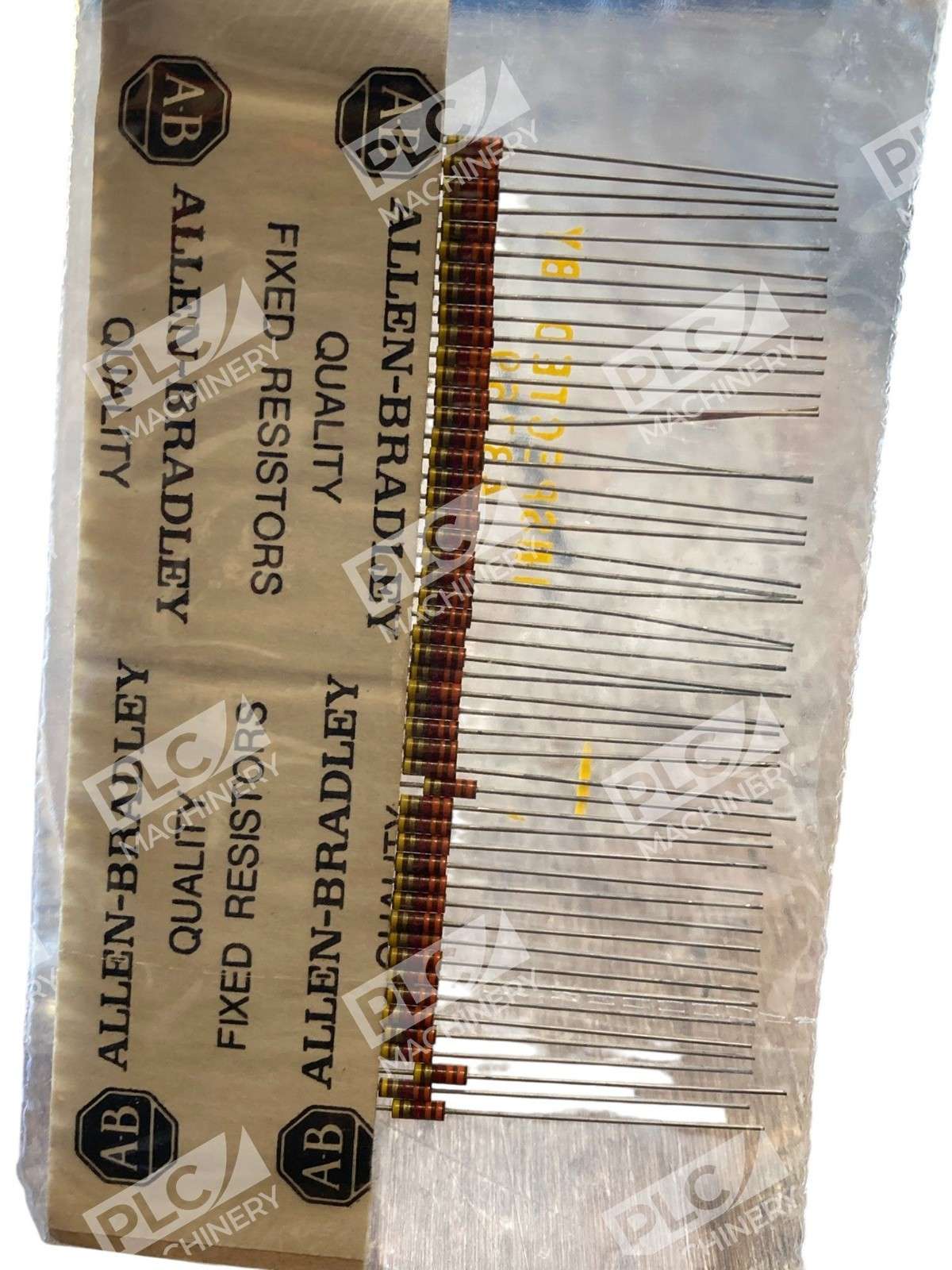
The Allen-Bradley RCR07G332JS is a military-grade carbon composition resistor designed for reliable performance in industrial and electronics applications. With a resistance value of 3300 ohms and ±5% tolerance, this component meets MIL-R-39008 specifications and delivers consistent electrical performance in harsh environments.
Key Features
- Resistance Rating: 3300 ohms (3.3 kΩ)
- Tolerance: ±5%
- Power Rating: 1/4 watt (0.25W)
- Voltage Rating: 250V maximum
- Axial leads with oxygen-free copper wire
- Hot-molded carbon composition construction for durability and reliability
- Temperature range: -55°C to +70°C operating
- Non-inductive, non-magnetic design
Technical Specifications
The RCR07G332JS meets established reliability standards under MIL-R-39008. This carbon composition resistor features robust through-hole mounting and is supplied as new in box stock. The part number decoding uses standard Allen-Bradley nomenclature where RCR indicates the military grade-S designation, 07G indicates the 1/4W power rating, and 332 converts to 3300 ohms using the standard formula (33 × 10²).
Typical Applications
- Industrial control circuits and PLC input/output modules
- Legacy equipment repair and restoration
- Audio amplifiers and high-fidelity circuits
- Military and aerospace electronics
- Snubber networks and surge protection circuits
- General-purpose fixed resistance applications requiring stable tolerance
Compatibility & Replacements
The RCR07G332JS is a legacy component from Allen-Bradley’s discontinued carbon composition resistor line. Original production ended in the 1990s; current stock represents new old stock (NOS). While modern film resistors can provide similar electrical characteristics, direct substitution should be verified for mission-critical applications, as carbon composition exhibits different noise and frequency response characteristics. Compatible alternatives include Vishay Dale film resistor types, though electrical performance may vary. Always consult application requirements before substituting legacy components.