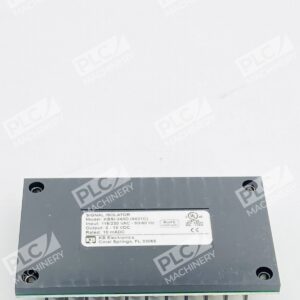


Overview
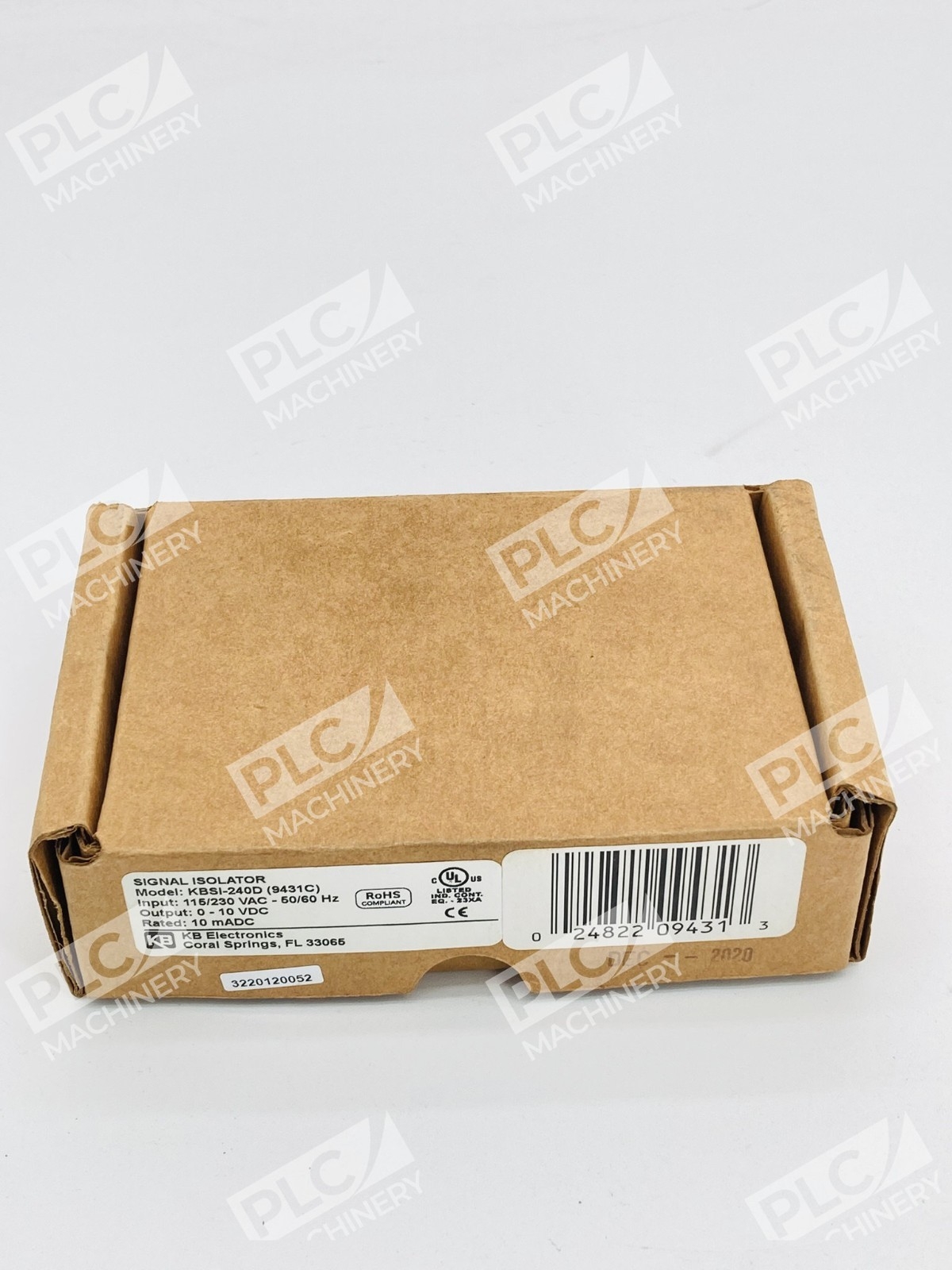
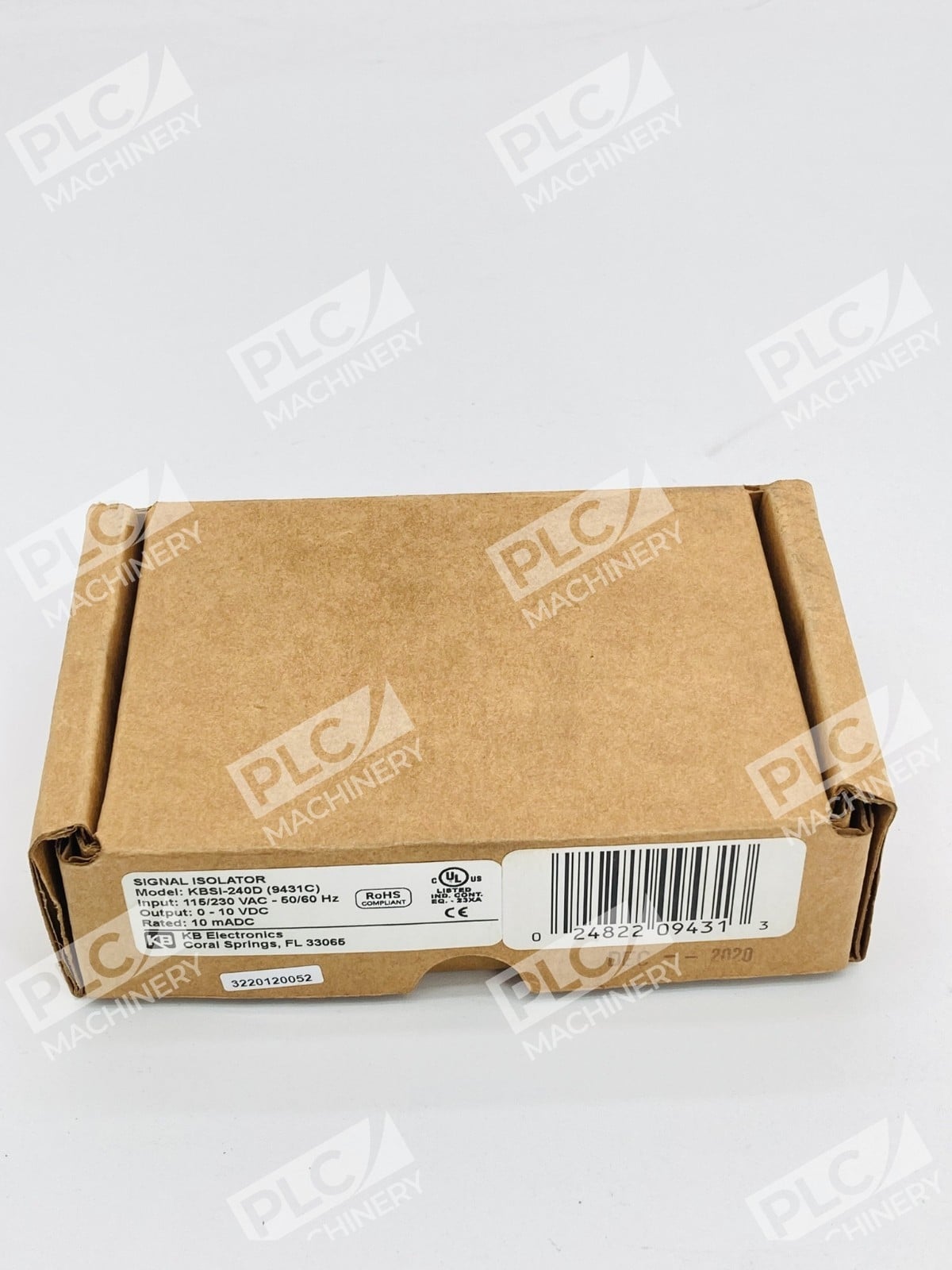
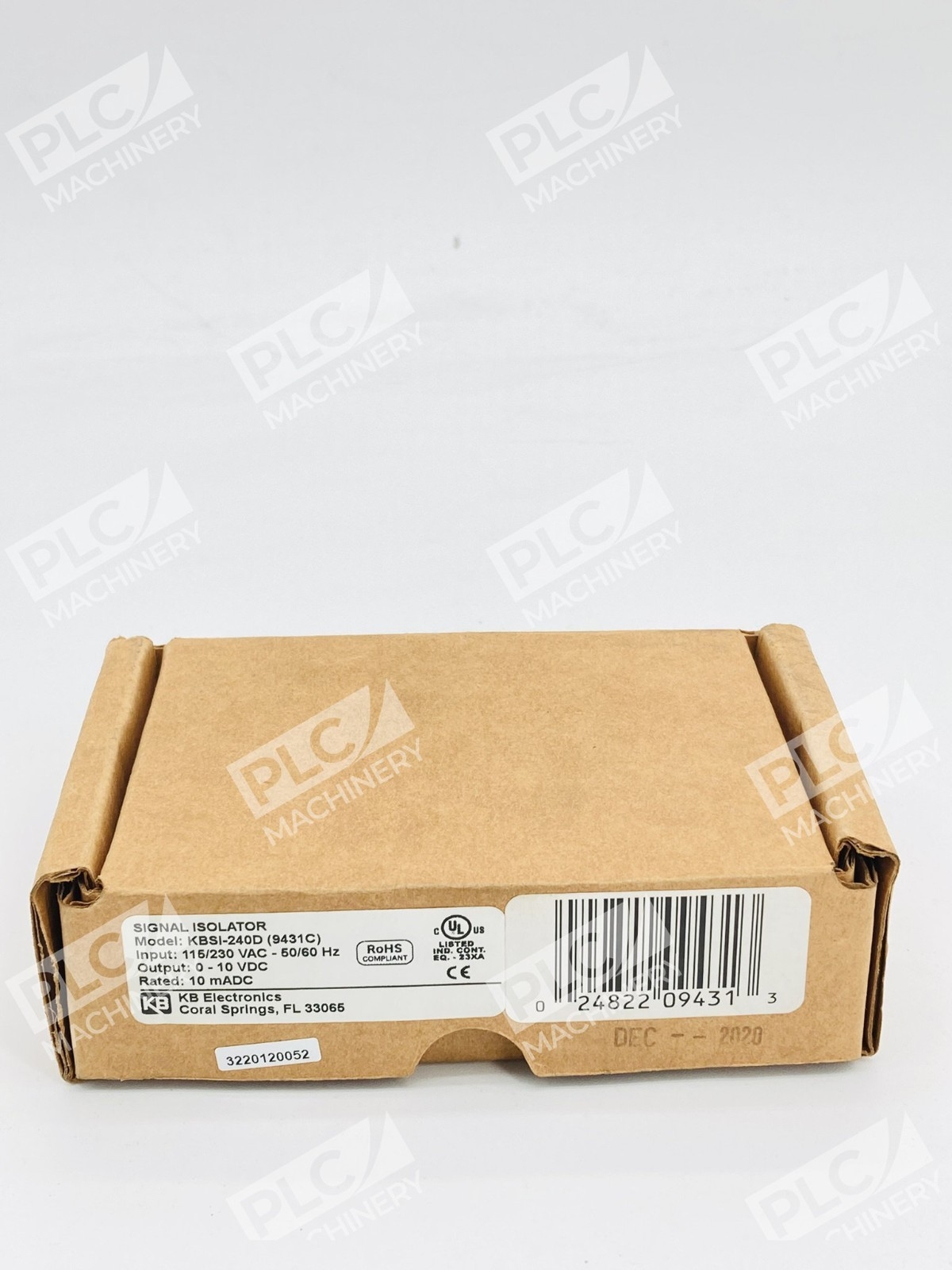
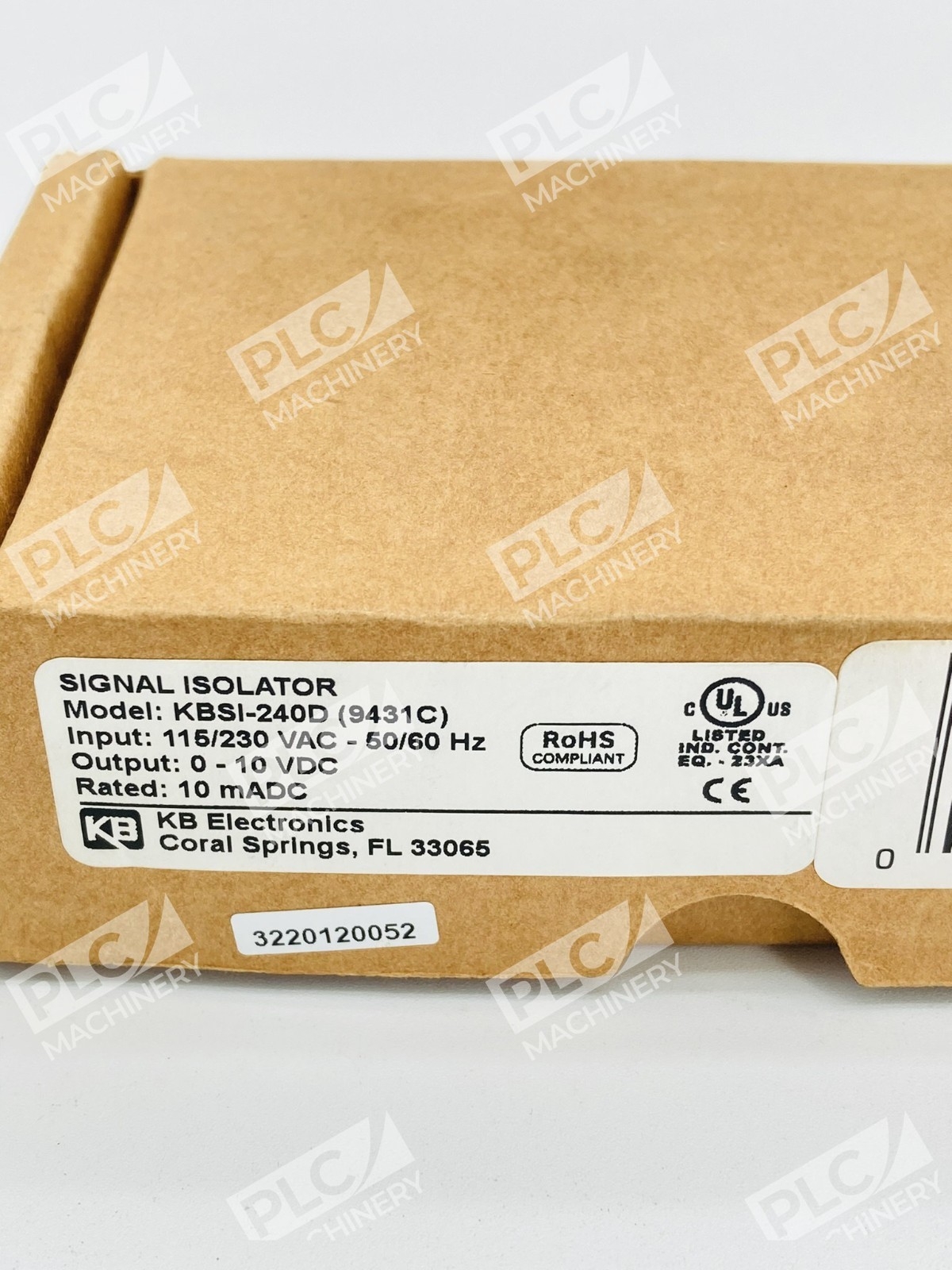
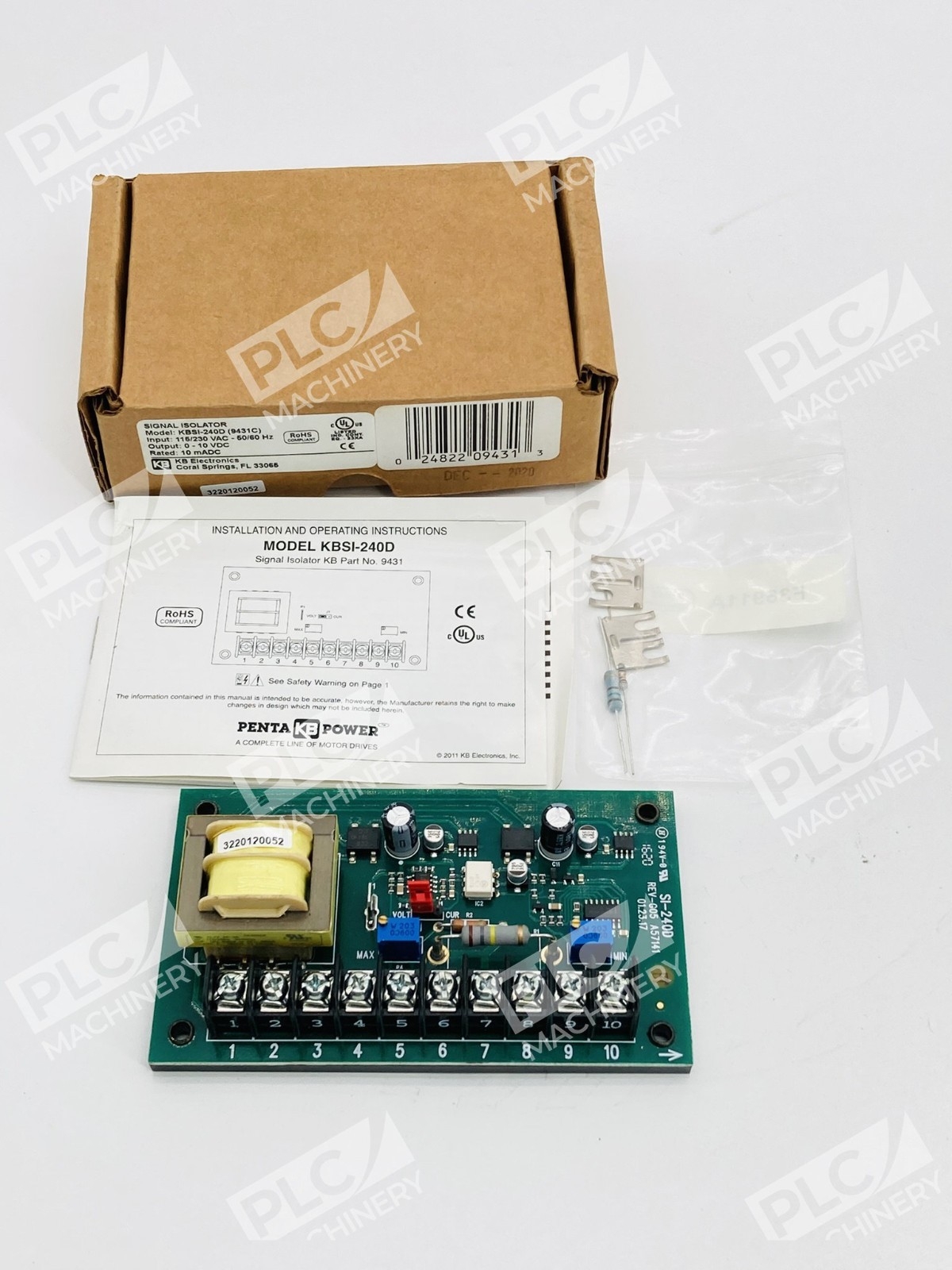
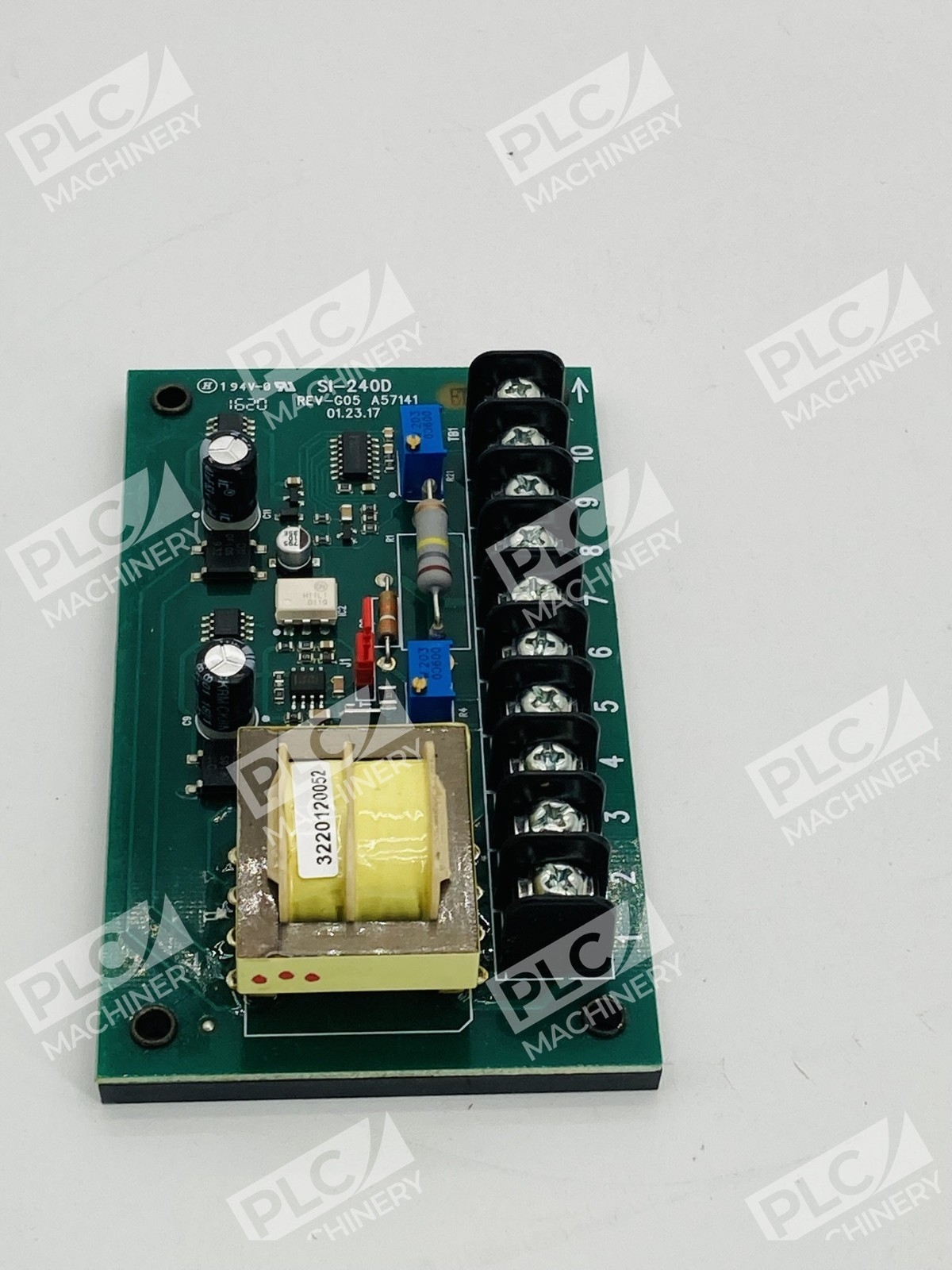
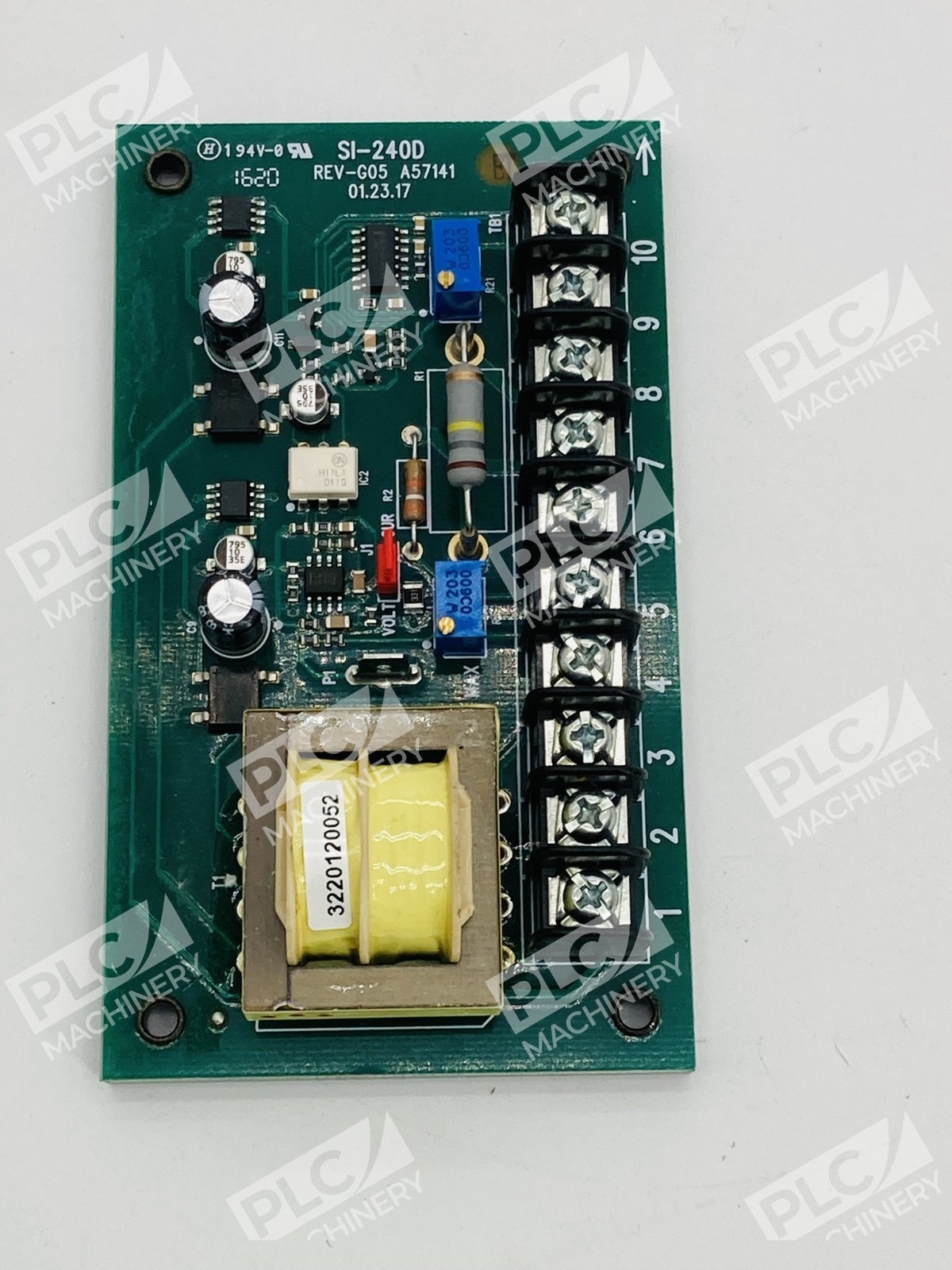
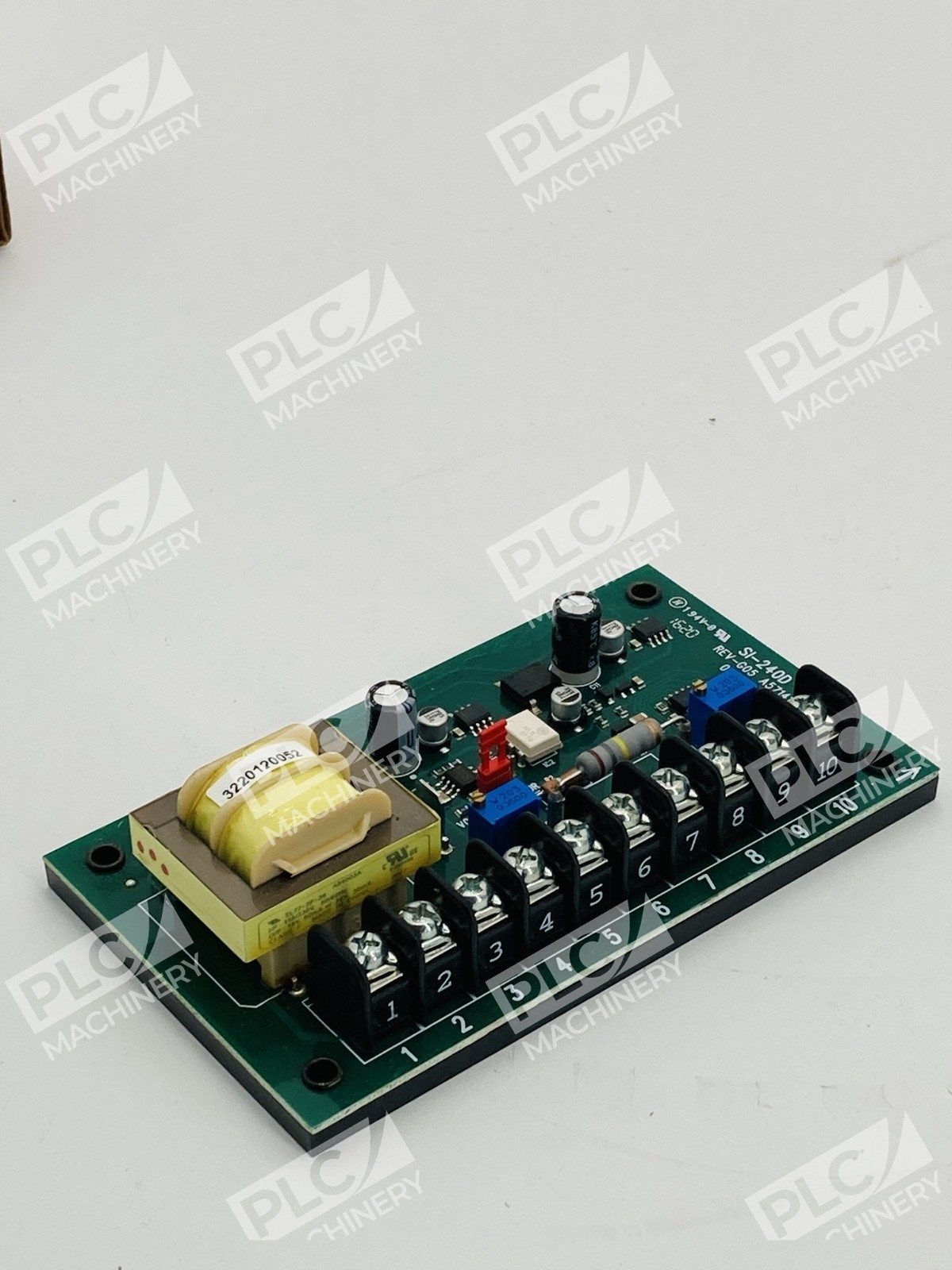
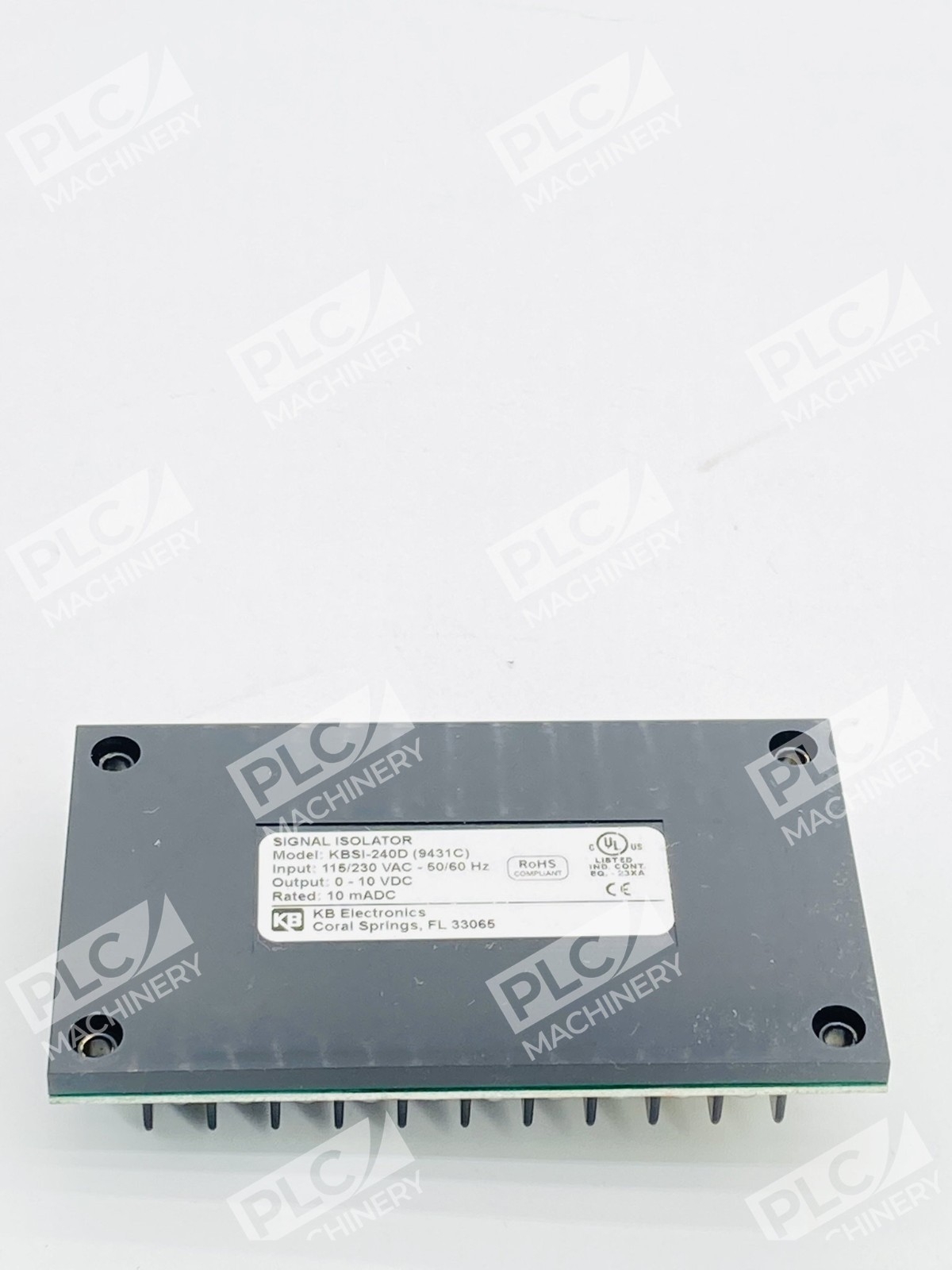
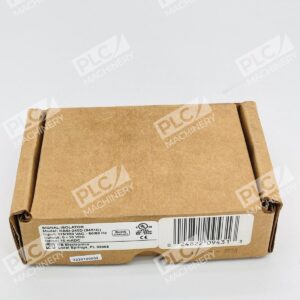
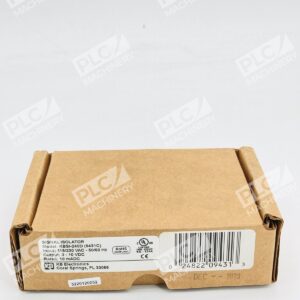
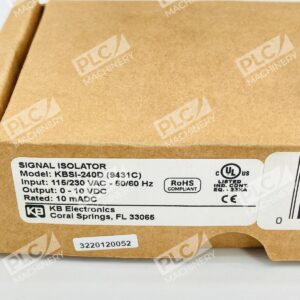
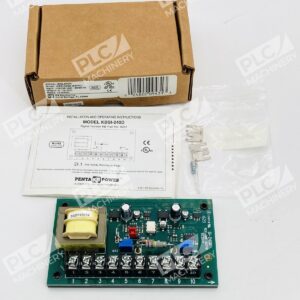
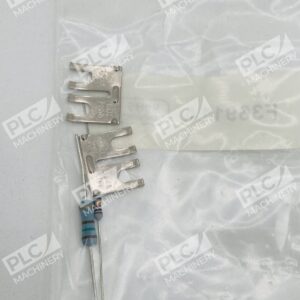
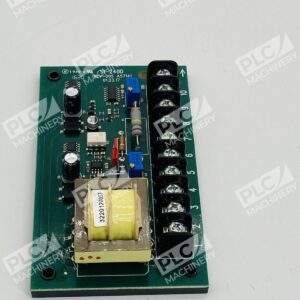
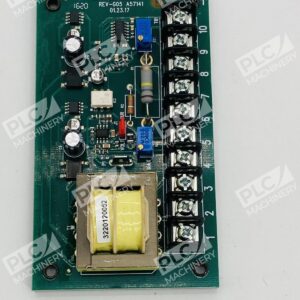
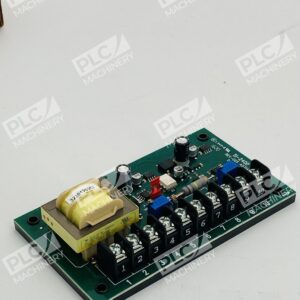
The KB Electronics KBSI-240D signal isolator delivers galvanic isolation between non-isolated input signals and KB motor speed controls. Signal sources include process controllers, transducers, microprocessors and programmable controllers. This stand-alone unit is essential for clean signal transmission in multi-motor or complex automation layouts where voltage noise must be eliminated.
Key Features
- Maximum output voltage of 10 volts, which is a linear function of the input
- Accepts a wide range of voltage (0-25, 0-120 and 0-550VDC) and current (1-5, 4-20 and 10-50mA) signals with multi-turn trimpots for Min and Max
- Operates on either 115V or 230VAC 50/60Hz
- Single model handles multiple input/output configurations without replacement
- Compact DIN-mount form factor for panel integration
Technical Specifications
The KBSI-240D is engineered for reliability across industrial temperature ranges and delivers consistent performance in motor control and process automation applications.
Typical Applications
- DC motor speed control systems with isolated potentiometer feedback
- Process controller interface to multi-motor drive systems
- Programmable logic controller (PLC) signal conditioning for motor speed commands
- Master/slave voltage-following systems with multiple motor slaves
- Transducer and microprocessor signal isolation for analog drives
Compatibility & Replacements
Compatible With
- KB Electronics DC motor speed controls (all series)
- KBIC and KBPC drive families
- External process controllers and industrial PLCs
- Process transducers and sensor outputs
- Programmable logic controllers (all brands)
Replaces / Drop-In Replacement For
The KBSI-240D (part number 9431) is the standard isolation module for all KB Electronics DC drive systems. Verify compatibility with your specific motor control or system integrator before ordering.
Works With
- KB Electronics DC drive control boards
- Analog signal conditioning systems
- Industrial automation networks using 0-10VDC reference signals
- Auto/manual potentiometer control schemes
- Master voltage-following configurations