
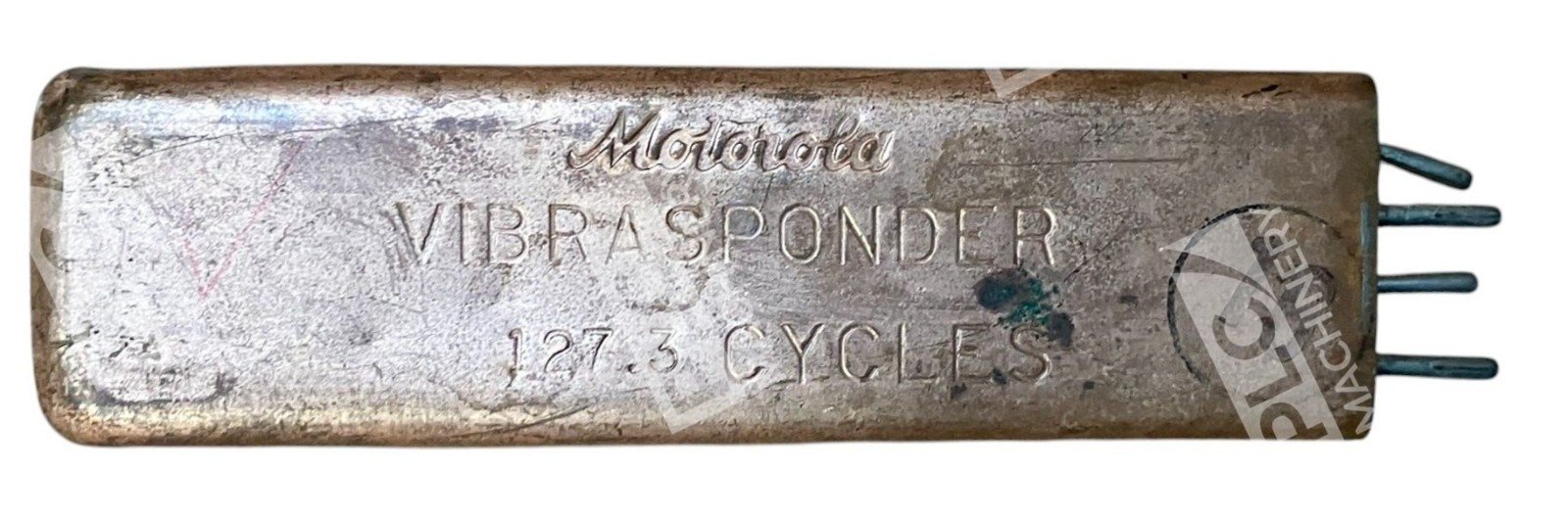
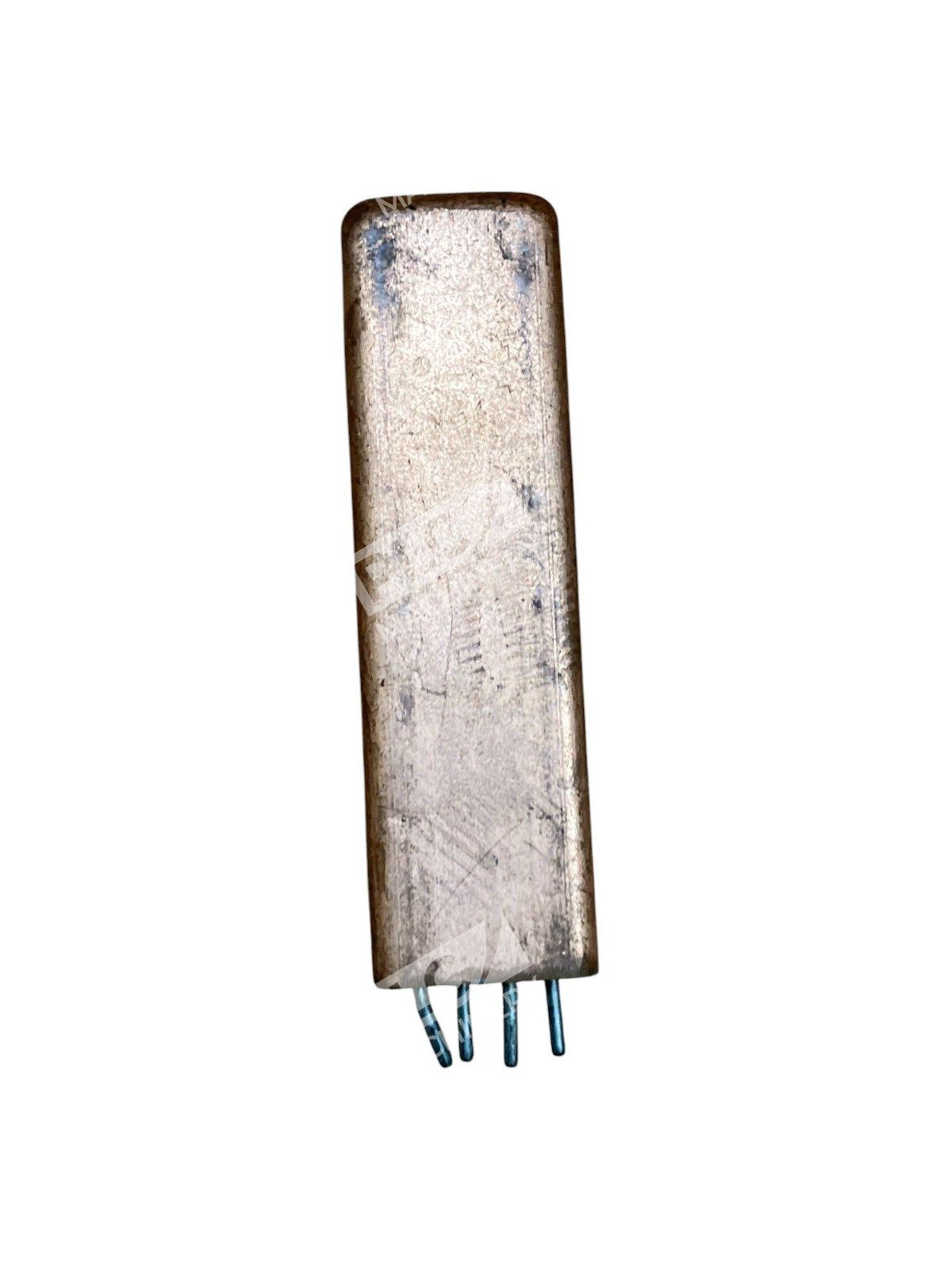

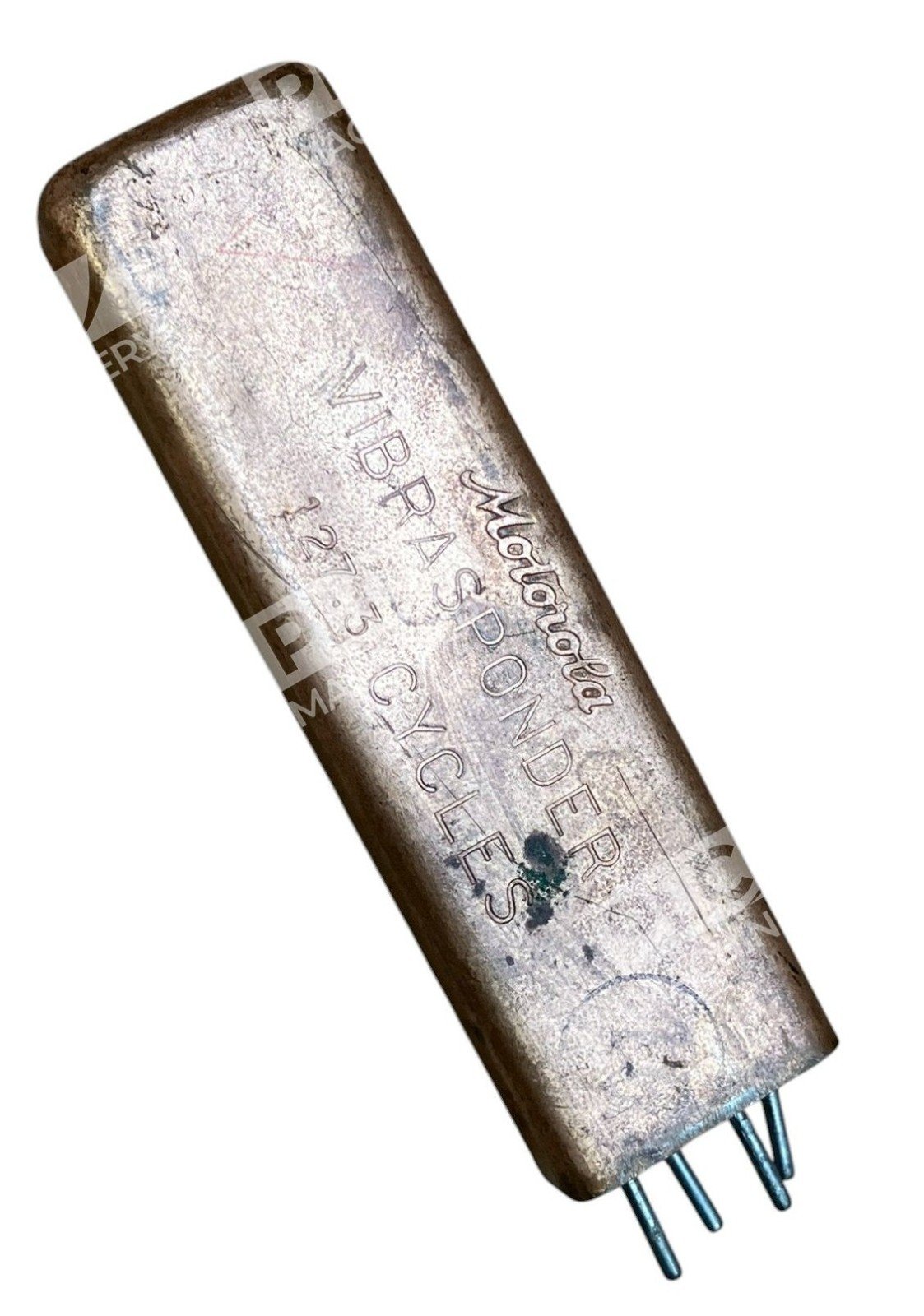


The Motorola Vibrasponder is an electromechanical device designed to receive specific sub-audible tones, commonly used in selective signaling systems. Operating at 127.3 cycles per second (Hz), this Vibrasponder is tuned to respond to a particular frequency, ensuring that only intended messages are received by the user.
In the mid-20th century, Motorola developed the Vibrasponder as part of its selective signaling paging systems. This technology allowed for more efficient communication by enabling individual receivers to be alerted selectively, reducing unnecessary broadcasts and enhancing message privacy. The Vibrasponder works in conjunction with the Vibrasender, a device that transmits a pure tone corresponding to the desired frequency. When the Vibrasponder detects its assigned tone, it activates the receiver, allowing the user to hear the incoming message.
The 127.3 Hz frequency is part of the Continuous Tone-Coded Squelch System (CTCSS), a method used to reduce interference on shared radio frequencies. By assigning specific sub-audible tones to different user groups, CTCSS ensures that only radios programmed with the matching tone will unmute to receive the transmission. This system is widely used in two-way radios to facilitate private communication channels within shared frequency bands.
Motorola’s Vibrasponder devices, such as the one operating at 127.3 Hz, played a crucial role in the evolution of radio communication, offering a reliable solution for selective signaling and contributing to the development of modern paging and two-way radio systems.

Reviews
There are no reviews yet.