
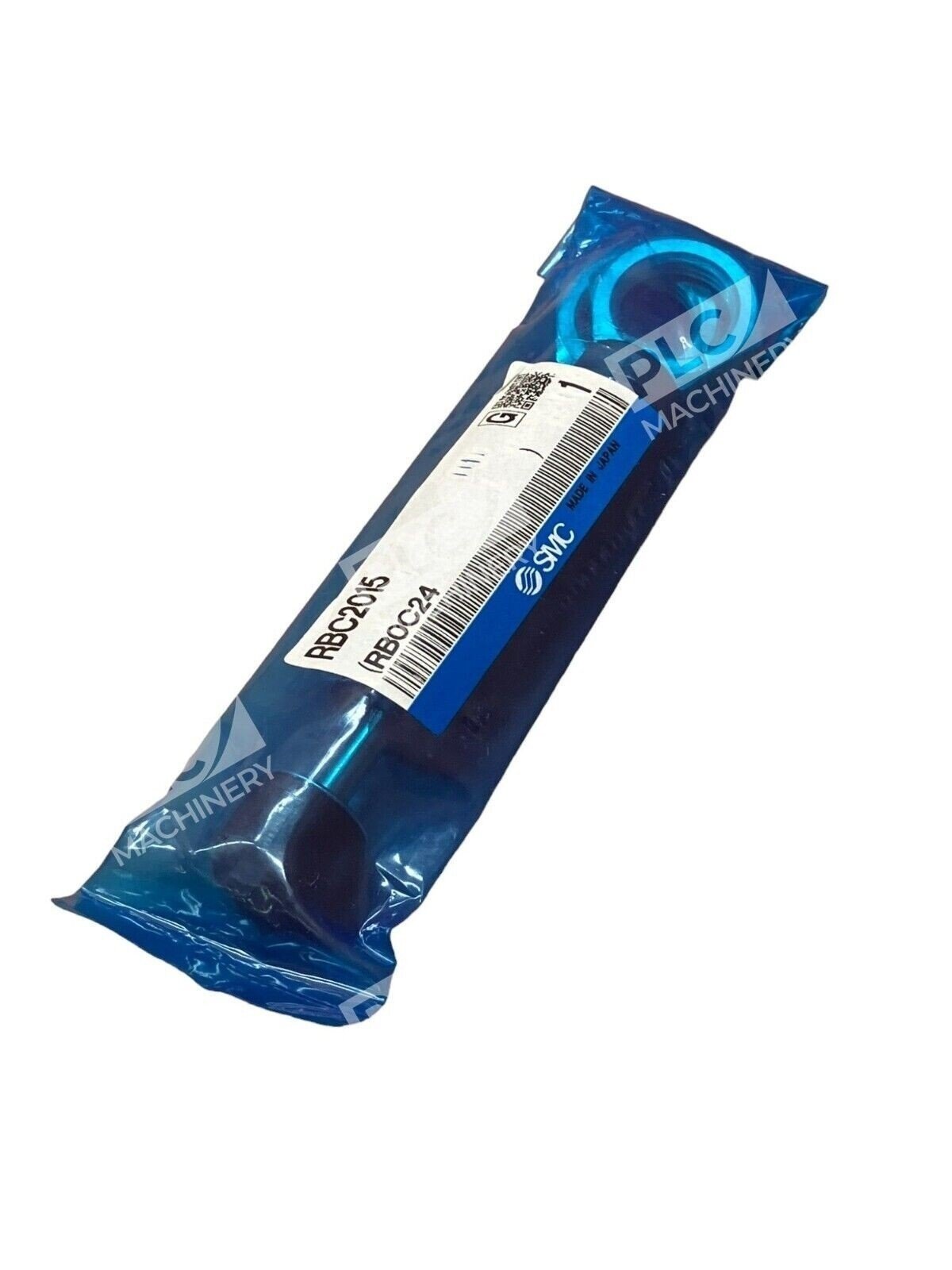
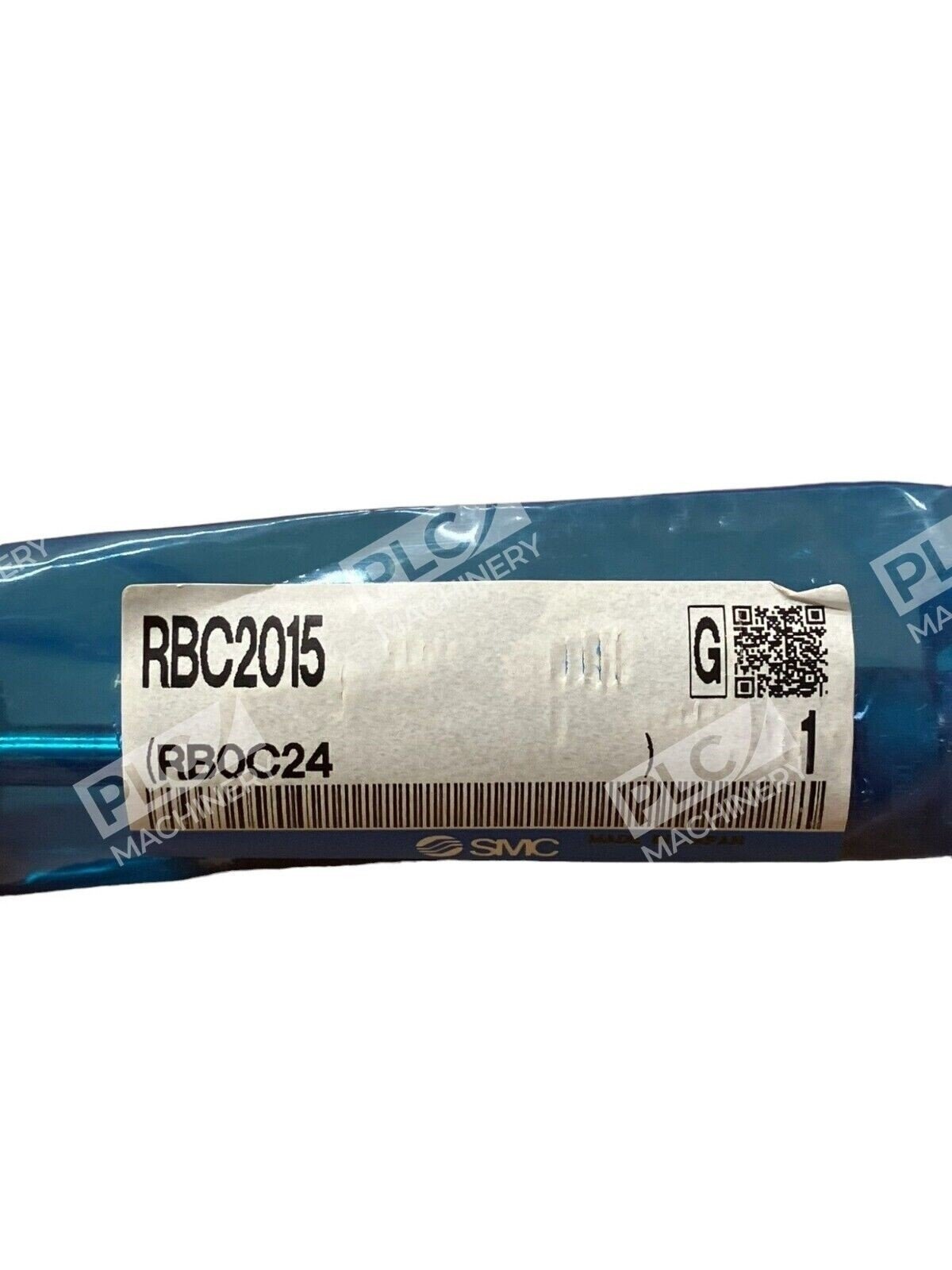
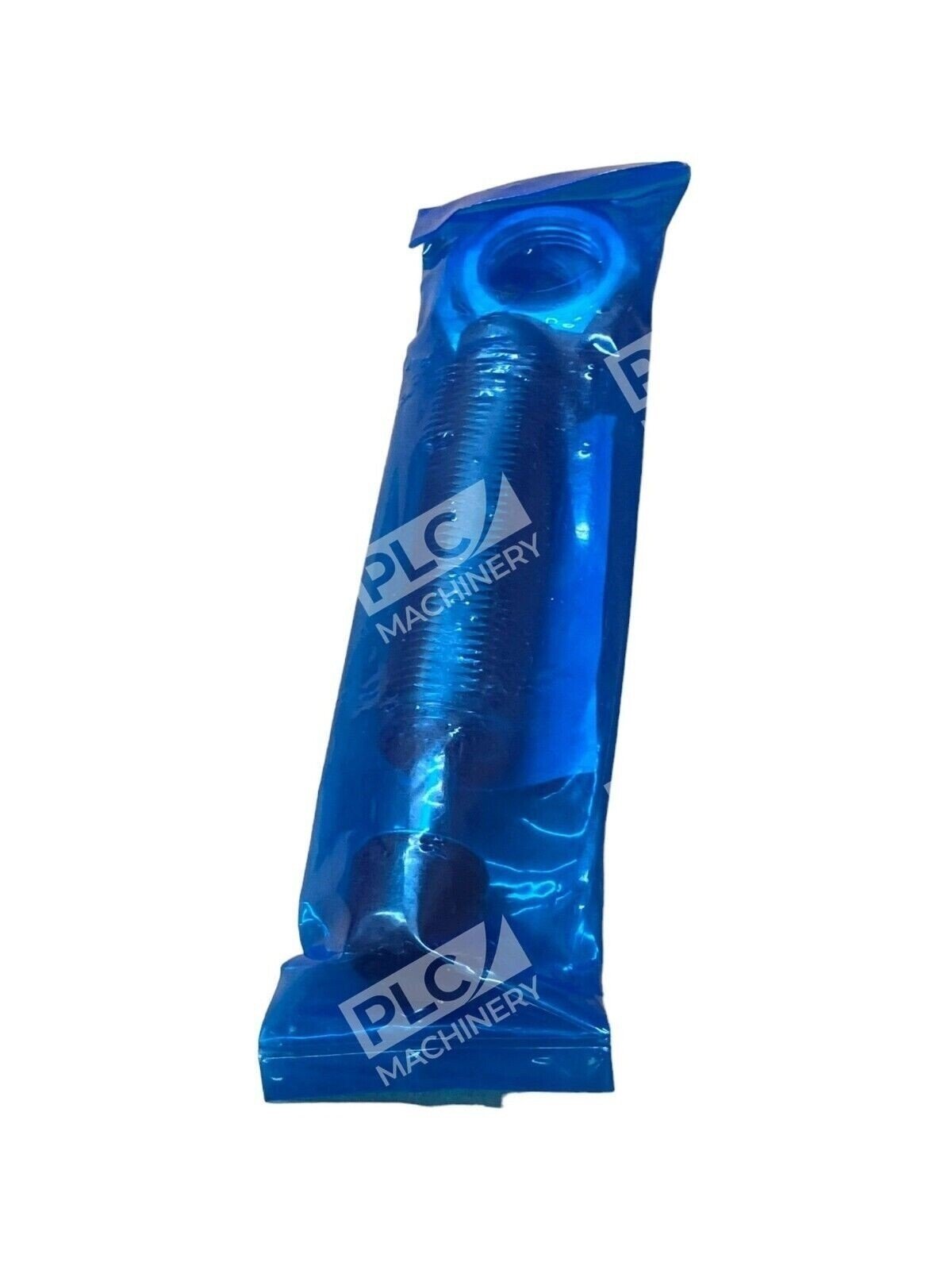
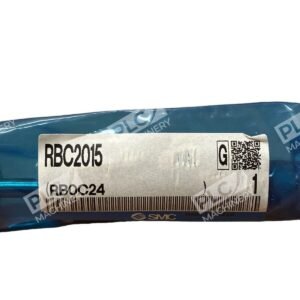
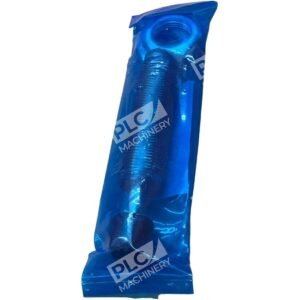
SMC RBC2015 Shock Absorber
The SMC RBC2015 is a self-compensating shock absorber engineered to provide consistent deceleration across varying speeds and loads without the need for manual adjustments. Its robust design ensures reliable performance in diverse industrial applications.
Key Features
- Self-Compensating Mechanism: Automatically adjusts to different speeds and loads, delivering uniform deceleration without manual intervention.
- Durable Construction: Features a steel body with a Weartec-Plus finish, suitable for harsh environments, and a hardened stainless steel piston rod for enhanced durability.
- Double Seal Enclosure: Incorporates a scraper and rod seal to minimize leakage, ensuring long-term reliability.
- High Energy Absorption: Capable of absorbing up to 58.8 Joules per cycle, effectively managing kinetic energy in dynamic systems.
- Wide Impact Speed Range: Operates efficiently within a collision velocity range of 0.05 to 5 m/s, accommodating various application requirements.
- Temperature Resilience: Functions reliably in ambient temperatures ranging from -10°C to +80°C, suitable for diverse operational environments.
Specifications
- Stroke Length: 15 mm
- Thread Size: M20 x 1.5
- Overall Length: 105.2 mm
- Body Length: 73.2 mm
- Return Force: 20.5 N
- Maximum Thrust: 1961 N
- Weight: 165 g
Applications
The SMC RBC2015 shock absorber is ideal for a variety of industrial applications, including:
- Assembly Line Machinery: Provides effective vibration dampening to enhance equipment longevity and product quality.
- Automotive Systems: Improves ride comfort and control by mitigating shocks and vibrations.
- Packaging Machinery: Protects products during transport by absorbing impact forces.
- Robotics: Enhances motion control and stability, contributing to precise operations.
- Construction Equipment: Mitigates shocks during operations, ensuring equipment durability and operator safety.
With its advanced features and robust construction, the SMC RBC2015 shock absorber is a reliable solution for managing kinetic energy in dynamic industrial environments.
Reviews
There are no reviews yet.